If you’re looking at hair restoration surgery, you might have seen the hair transplant donor area mentioned. The donor area refers to the area of healthy hair growth from which follicles are harvested.
According to a survey by the International Society of Hair Restoration Surgery (ISHRS), the scalp is the most common donor site and is used in 92.5% of cases [1], although hair from other areas of the body can also be used. In this article, we’ll explore:
What the hair transplant donor area is
How different types of hair transplant affect the donor area
What happens to the donor area after a hair transplant
The hair transplant donor area is where healthy follicles are taken from, usually the back and sides of the scalp. These follicles are then transplanted to areas of hair loss.
While the scalp is used as the donor area in most cases, the second most common areas are the beard (7.5% of cases) and the chest (2.4%) [1]. Other areas of body hair can also be used in certain cases, such as the stomach or legs, and transplanted from body to scalp.
Hair transplant donor area: Expert advice
What is the safe donor area?
Technician Evgeniya Fedorova explains what the safe donor area is and why it’s important.
How many hair grafts can you harvest?
Technician Sophie Isherwood explains how many follicles it’s safe to take from the donor area.
How to reduce hair transplant risks
Patient advisor Adam Smith reveals the single best way to reduce hair transplant risks.
FUE involves taking individual hair follicles from the donor area using a micro-punch tool. This is minimally invasive, and scarring is often invisible.
FUT involves taking a strip of skin containing multiple hair follicles from the donor area. This allows more follicles to be moved in one go, leaving a strip scar and extending the donor area’s healing phase when recovering from a hair transplant.
What is the safe donor area?
The safe donor area refers to the area of your scalp where hair follicles aren’t sensitive to dihydrotestosterone (DHT). DHT is the hormone responsible for male pattern baldness. It binds to receptors in the hair follicles, causing them to shrink and stop producing hair.
Most men with otherwise healthy hair have a band of follicles that aren’t sensitive to DHT at the back and sides of the scalp. This is the safe donor area. Surgeons can safely harvest these follicles and transplant them to other areas, and the hair won’t fall out due to male pattern baldness.
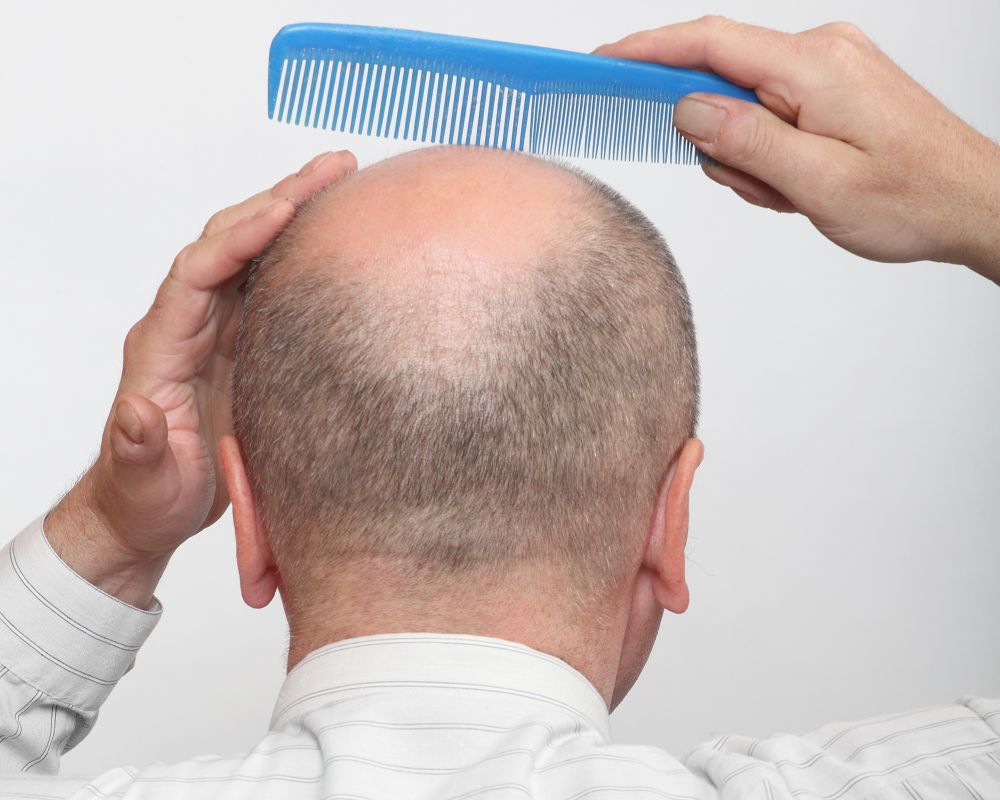
This image shows a typical model of the safe donor area:
What happens to the donor area after a hair transplant?
Hair won’t regrow where follicles have been removed from the donor area. However, a skilled surgeon will extract follicles in such a way that the donor area looks normal. The unaffected hair follicles will continue to grow around the donor area and disguise the areas where follicles have been removed.
Potential issues in the donor area after a hair transplant
Like any surgery, a hair transplant comes with some risks. Complications in the donor area affect around 4.2% of people who have a hair transplant [1]. Let’s take a look at some of the possible risks.
Infection
Infection is a major potential complication at the donor site. This happens if harmful bacteria enter the wounds in the donor area before they’ve healed.
This can happen as a result of poor hygiene and sanitation during the procedure (such as not properly sterilising surgical equipment) or if you don’t take precautions to keep the donor site clean in the days after surgery.
Unnatural results
Another potential complication for the donor area is an unnatural-looking result. Visible scarring and decreased hair density in the donor area after a hair transplant can make it obvious that you’ve had surgery.
Overharvesting of hair follicles is another issue to watch out for. For this reason, skilled surgeons are often reluctant to perform hair transplants on very young patients, particularly those in their late teens or early 20s [2]. In this instance, medication is usually recommended until hair loss has stabilised [2].
Hair transplant overharvesting can leave you with an unnatural-looking result in the donor area. Unfortunately, if your donor area is overharvested, correcting your hair transplant may not be possible because your supply of healthy hair follicles may be used up.
How surgical experience reduces the risk of donor area complications
The risk of complications and unnatural-looking results at the donor area are much more common if your surgeon is inexperienced. This has been highlighted recently by increasing numbers of people having cheap hair transplants in countries like Turkey.
Some of these are performed on the black market, and the surgeon is not qualified in some cases. In one Turkish hair transplant case, the procedure was performed by an estate agent [3].
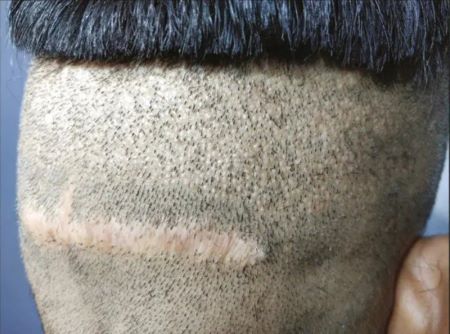
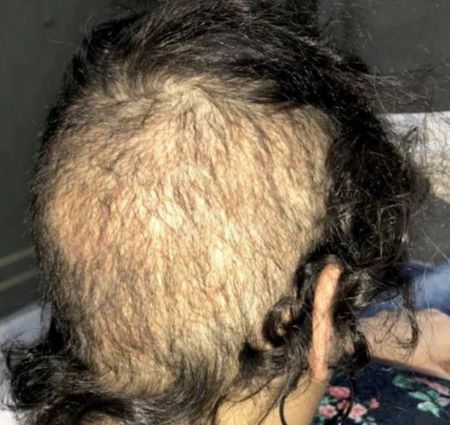
Here are examples of what can happen to the donor area if your surgeon hasn’t got the skill and experience required:
The image above shows overharvesting using the FUT technique. The strip of transplanted hair follicles was too large, leaving a large and obvious scar at the back of the patient’s head.
This image shows overharvesting in a female patient. Too many follicles were taken from the donor area, leaving the back of the head looking extremely sparse.
Caring for the donor area after a hair transplant
After a hair transplant, looking after your donor area can make sure you get the best outcomes. Here are some tips to protect your donor area in the first week or two following surgery [4]:
Take any medication exactly as prescribed to help prevent a hair transplant infection in the donor area
Can the donor area be reused for future transplants?
A hair transplant is permanent, and in many cases, second hair transplants are never needed. However, if you have aggressive hair loss, you may find that you continue to lose hair around the transplanted area, which can result in a need for a second transplant.
An experienced surgeon plans for this eventuality by recommending effective hair loss management therapy (such as Finasteride), and by making sure they don’t overharvest your donor area. As long as you have enough healthy hair follicles left in your area for a second transplant, the donor area can absolutely be used for another procedure.
If you don’t have enough healthy hair follicles left, your surgeon may have to use hair from other areas of the body, such as the beard or chest. If this isn’t an option, you may not be able to have further surgery.
In many cases, a hair transplant after 10 years will continue to produce healthy hair and look natural. Many people who have a hair transplant get the results they want for a lifetime. Sometimes, a second transplant might be needed after 10 years if your hair loss has continued.
In some cases, the donor area might be affected by hair shedding. This is known as donor area effluvium and may be caused by extensive follicle harvesting [5]. As your body recovers, your hair should start to grow back as normal, but it may take several weeks or months [5].
Yes, pubic hair is occasionally used for a hair transplant. However, pubic hair is often coarser than scalp hair and so will only be suitable for certain areas of the scalp. The pubic area is not commonly used as a donor area because it’s a sensitive location. You can also get a pubic hair transplant to restore hair to a balding pubic area.
Whether you have hair transplant regrets depends on the quality of your procedure and your results. At the Wimpole clinic, 97 to 100% of people have a successful hair transplant and do not regret the procedure. However, rates can be lower elsewhere. The ISHRS reported that 6% of hair transplant repairs were the result of black market hair transplant failure [1].