What is Liftulo?
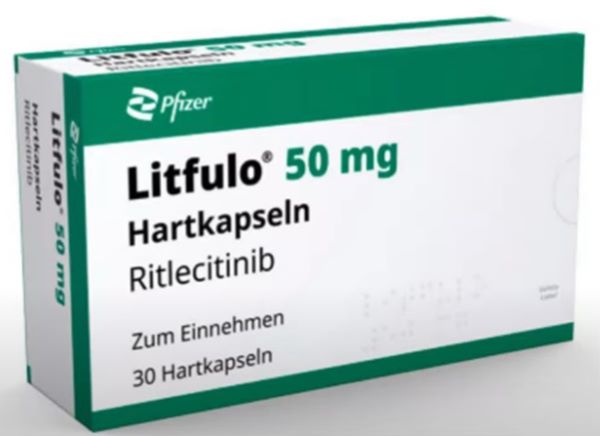
Litfulo is the brand name of a medication called ritlecitinib. This oral drug, sold by pharmaceutical giant Pfizer, is in a class called Janus kinase (JAK) inhibitors. It is recommended for adults and children over the age of 12 who experience severe alopecia areata [3].
The FDA and MHRA approved Litfulo to treat this autoimmune hair loss condition in 2023. Research conducted so far shows very promising results in restoring hair in patients with advanced patchy hair loss [4].
Does Litfulo treat male pattern baldness?
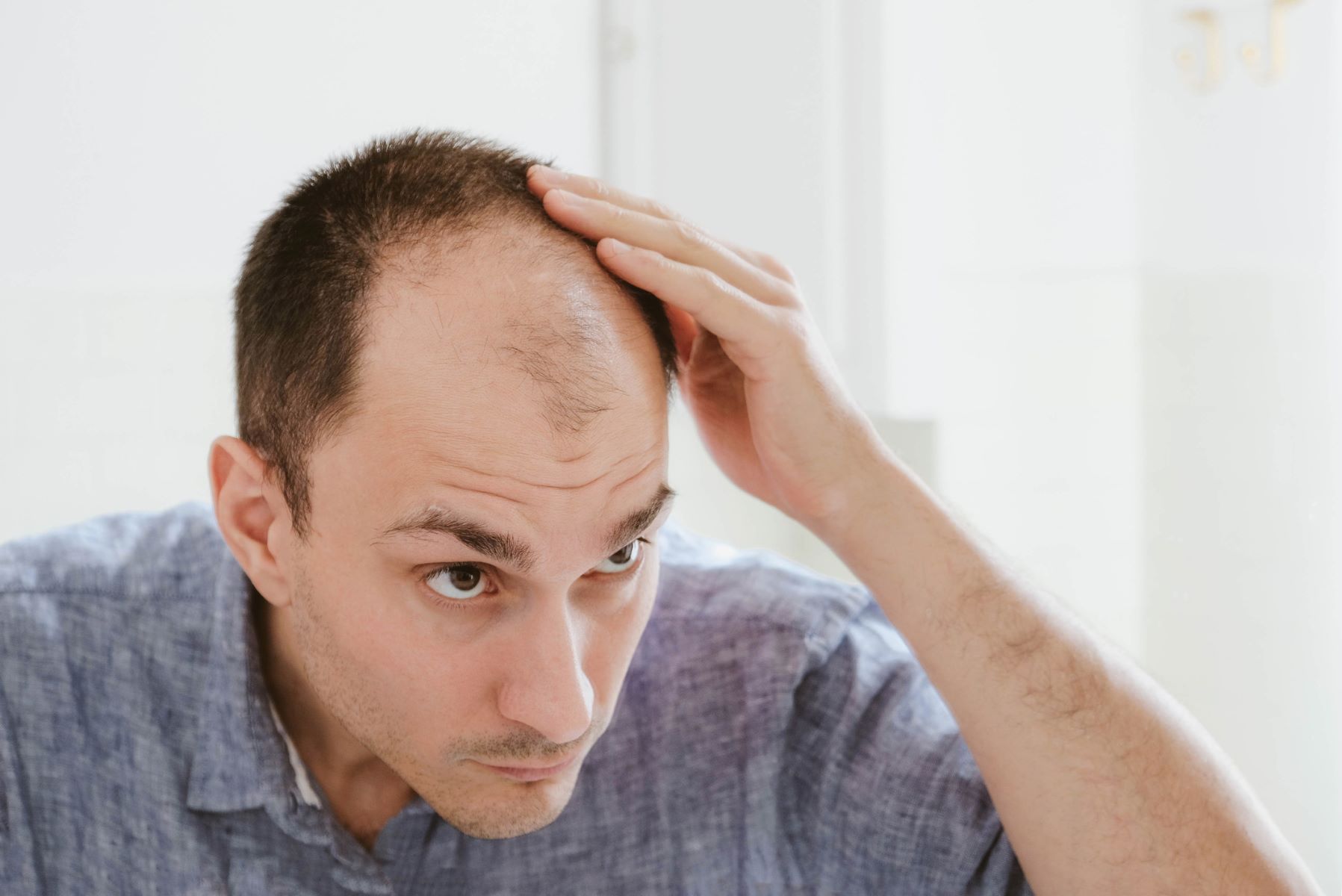
No, Litfulo has no effect on male pattern baldness. That is because its active ingredient, ritlecitinib, is only effective in regulating immune system activity. It can, therefore, treat autoimmune types of hair loss, such as alopecia areata, but not genetic and hormonal conditions, such as androgenetic alopecia.
Androgenetic alopecia occurs in people who have a genetic predisposition for developing this condition. It develops when a male hormone naturally present in your body called dihydrotestosterone (DHT) binds to androgen receptors in your hair follicles, making them shrink and causing hair miniaturisation. If left untreated, the affected hair follicles will eventually stop producing hair altogether [5].
How does Litfulo treat hair loss?
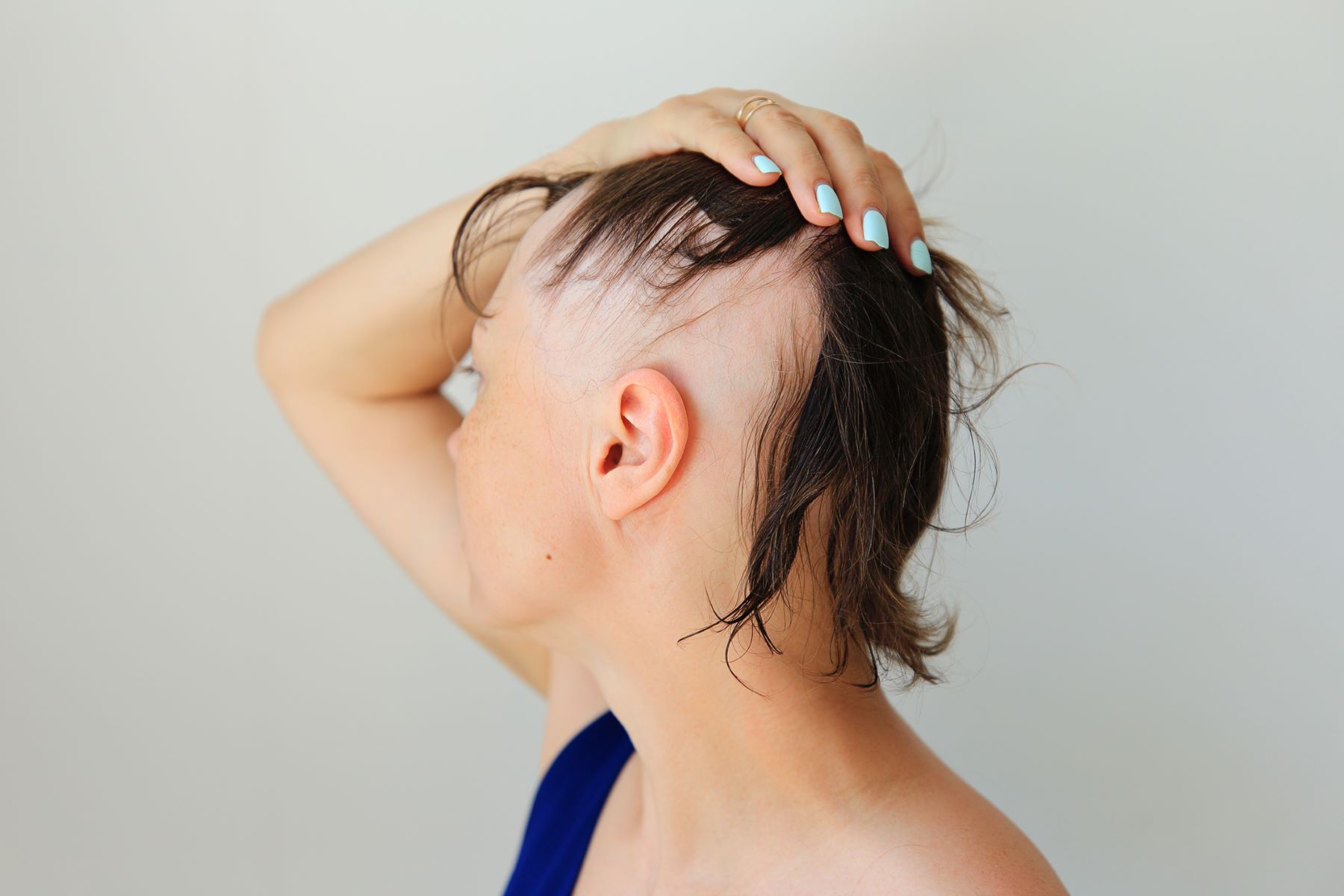
Alopecia areata is an autoimmune hair loss condition. It occurs when your white blood cells attack your hair follicles as a result of an overactive immune system [6]. Your immune cells use signalling pathways to communicate and coordinate their attacks when they perceive a threat. However, in people with autoimmune disorders, this signalling creates intense inflammation even when no real threat is present.
JAKs are a type of enzyme that help your immune cells send each other signals, telling them to grow, organise and respond to threats [7]. Litfuko is a JAK3 inhibitor. It reduces the activity of JAK3 enzymes, which play a role in immune cell signalling. Inhibiting the activityof these enzymes can suppress your immune response [3].
Does Litfulo really work for baldness?
According to research, Litfulo seems to work quite well for a single, specific type of autoimmune baldness: alopecia areata.
Several clinical trials conducted on ritlecitinib, the active ingredient in Litfulo, have revealed that this medication is generally safe and well-tolerated and that it can produce substantial hair growth in patients with alopecia areata, especially with higher medication doses [8][4].
A 2017 study [9] showed, on average, a 31.1% improvement in hair loss for patients with advanced alopecia areata (over 50% hair loss) treated with ritlecitinib for 24 weeks. This compared to only 1.4% improvement in the placebo group. The effects of this medication seem to be long-term, as one clinical trial found the patients’ clinical response to this medication was maintained through week 96 after treatment [10].
Litfulo may also help other types of autoimmune hair loss, such as that caused by scalp psoriasis or lichen planopilaris, as JAK inhibitors are sometimes used to treat these conditions [11]. However, specific research is needed to prove this effect.
What side effects does Litfulo have?
While it is generally considered safe, some of the patients in clinical trials have reported the following reactions to ritlecitinib [10][9][13]:
- Nasopharyngitis (common cold) (approximately 23% of test patients vs 15% in the placebo group)
- Upper respiratory tract infections (approximately 20% of test patients vs 17% in the placebo group)
- Headaches (approximately 21% of test patients vs 19% in the placebo group)
- Acne (approximately 13% of test patients vs 10% in the placebo group)
- Nausea
- Diarrhoea
- Folliculitis
- Mild to moderate shingles
Very rarely, patients who were treated with ritlecitinib developed more serious health problems, including a pulmonary embolism and (in two cases) breast cancer [4]. However, at this point, there is no evidence that this medication caused the respective life-threatening events.
Unlike other JAK inhibitors, ritlecitinib was not found to affect blood test results (for example, it didn’t impact cholesterol levels, lipid profile or serum creatine) [9][4].
Who should not take Litfulo for hair loss?
You may want to reconsider using Litfulo for hair loss if any of the following apply to you [4]:
- You have a type of hair loss other than alopecia areata (e.g. male or female pattern baldness).
- You have an active or chronic infection.
- You have been hospitalised or received IV antibiotics for an infection in the past 6 months.
- You have recurrent shingles.
- You are currently being treated for hepatitis or tuberculosis.
- You are taking medications associated with hearing loss.
It is a good idea to provide your doctor with a thorough account of your medical history before they prescribe ritlecitinib for your hair loss. Never self-medicate with Litfulo, as it may interfere with your medication or pose a risk to your health.
What are the best treatments for male pattern baldness?
If you are looking for effective, evidence-based treatments for male pattern baldness, here are some of the best options currently available.
A hair transplant
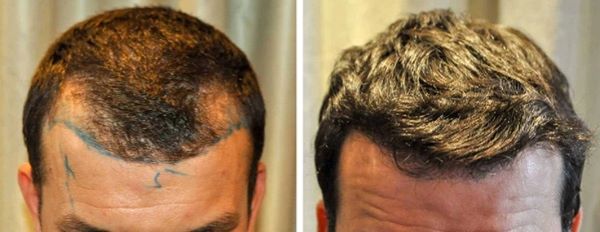
If you are experiencing a receding hairline and/or a bald spot on your crown, a hair transplant may solve your hair loss problems forever. This procedure is fast, simple, and requires no hospitalisation. Your surgeon will harvest healthy hair follicles from the back of your head, where they are less sensitive to DHT. They will then transplant them to your balding areas in a manner that closely mimics their natural growth pattern.
Whether you opt for FUE or FUT hair restoration surgery, this option is as close as you can get to a cure for baldness with today’s technology. That is because while all the other treatments need to be consistently used, a hair transplant is permanent.
Finasteride
This medication is the most widely prescribed for male pattern baldness. That is because numerous studies have shown that Finasteride can effectively lower the level of DHT in your blood, curbing and even reversing androgenetic alopecia [13].
However, while it is safe and well-tolerated for long-term use by men, premenopausal women can’t use Finasteride, as it can cause birth defects and hormonal imbalances.
Dutasteride
Dutasteride has been shown to be even more effective than Finasteride in reducing hair loss and stimulating regrowth in male pattern baldness, with similar side effects [14]. It inhibits all three types of 5-alpha reductase (the enzyme which converts some of your testosterone into DHT), while Finasteride only inhibits two of them [15].
However, at this time, Dutasteride is not yet approved for hair loss, so it can only be prescribed off-label. This drug is not recommended for premenopausal women either, for the same reasons as Finasteride.
Minoxidil
If your hair loss is in the early stages, you can try Minoxidil. This medication is normally used topically. It works by dilating the small blood vessels in your scalp which nourish your hair follicles [16]. This helps more oxygen and nutrients reach them, giving them the resources they need to produce fuller, stronger, healthier hair.
Minoxidil can also help treat other conditions, such as alopecia areata and telogen effluvium.
Platelet-rich plasma (PRP) hair treatment
Getting PRP hair treatment involves having a small quantity of blood taken from your arm. The blood is then spun at high speeds inside a centrifuge to separate the platelet-rich plasma from the other blood fraction. The PRP is then injected into the thinning areas of your scalp.
PRP contains high quantities of growth factors, which are released upon being injected into your scalp. These growth factors help repair your damaged hair follicles, as well as the small blood vessels that nourish them. In doing so, they stimulate your follicles for hair growth [17].
Low-level laser therapy
Red light therapy for hair growth is a form of low-level laser therapy that uses red or near-infrared light to curb hair thinning and increase hair density. The red light is absorbed by your scalp where it helps optimise cell function and improve mitochondrial activity. It also helps dilate the small blood vessels in your scalp, improving blood flow to your hair follicles.
This treatment has proven effectiveness in androgenetic alopecia, as well as other types of hair loss, such as alopecia areata [18].