What is scalp eczema?
Eczema is a chronic skin condition that manifests with inflammation, redness, dryness, itching, and in some cases, oozing or fluid-filled blisters on the affected site. It is normally diagnosed in childhood and frequently continues into adulthood, and its progression is often unpredictable [3]. It can range from mild, barely noticeable forms to severe manifestations that require medical treatment. This condition can occur anywhere on your body, including your head – when that happens, it is called scalp eczema.
There are several kinds of scalp eczema: some genetic, some fungal, and some triggered by contact with irritant substances. This condition is recurrent, meaning that once you have it, its symptoms can be treated, but it will often flare up again at a later point [1].
Can scalp eczema cause hair loss?
Scalp eczema does not normally cause hair loss [2][4]. However, severe forms can produce significant enough scalp inflammation to affect your hair in several ways [5][6]:
- The hair strands can become loose inside the hair follicle, which makes them fall out or become dislodged more easily.
- Blood flow to the hair roots may be restricted, depriving the hair of the oxygen and nutrients it needs to thrive. This can push too many follicles out of the growing phase of the hair growth cycle into the shedding phase, leading to telogen effluvium [7].
- The skin barrier can become damaged, making the affected parts of the scalp lose moisture and dry out. This can lead to a very itchy scalp; vigorous scratching can cause hair breakage.
- Sebaceous glands may produce less natural scalp lubricating oil (sebum), drying out your scalp even further. This can give you dry, brittle hair that breaks easily.
If you suspect your eczema is causing your hair loss, it is best to see a dermatologist or a trichologist. They can check if you have a type of alopecia alongside your dermatitis.
Does scalp eczema hair loss grow back?
It’s quite unlikely that eczema is causing your hair loss. But if this is the case, your hair should start to regrow once the condition has been successfully treated or resolved spontaneously. However, your scalp eczema may flare up again at a later date. It can usually be triggered by factors such as [1][8]:
- Times of stress or exhaustion
- Cold weather
- A weakened immune system
- Hormonal changes
- Exposure to certain allergens or irritants
If you have a more severe type of scalp eczema, where the skin cracks and bleeds, seek medical treatment and keep the area clean. When the skin barrier is damaged and you have open wounds, it is easy for bacteria to get inside, causing an infection. Left untreated, infections can advance, causing health problems and even scarring alopecia. If this happens, a hair transplant into scar tissue may be your only chance of restoring hair growth in the affected area.
Scalp eczema types, causes and symptoms
A complex combination of factors can cause the different types of eczema. The three common forms of this condition that can affect the scalp are as follows:
Seborrheic dermatitis
This yeast infection of the scalp affects approximately 3-5% of the worldwide population. It can involve several parts of the body, but it affects the scalp in 70% of cases [8]. It often appears in babies, with 42% of newborns affected. This is known as cradle cap [9].
Prevalence increases again at puberty, as hormonal changes lead to increased sebum production on the scalp. The final peak is between ages 40-60, when further hormonal fluctuations normally occur. Seborrheic dermatitis can flare up frequently and its symptoms can be treated, but it cannot be permanently cured [10].
Causes: Seborrheic dermatitis is caused by a fungal infection known as Malassezia furfur [11]. This fungus normally lives on the skin and scalp, but sometimes overgrows, leading to skin conditions. It feeds on the natural oil (sebum) secreted by your scalp, making it dry and causing inflammation.
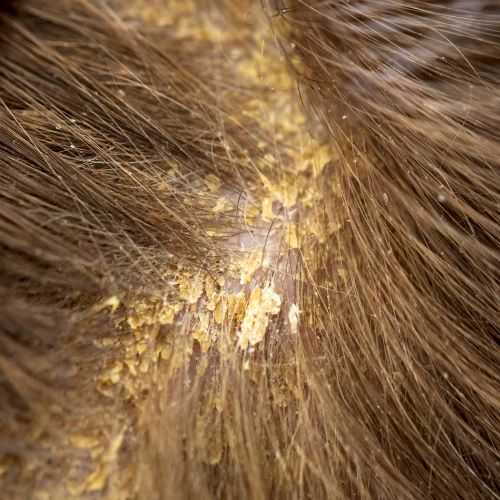
Symptoms: Yellow greasy scales or plaques, inflammation, redness, itchiness and tenderness of the scalp. In some cases, you may have scalp lesions or a weeping rash [11]. Seborrheic dermatitis doesn’t normally cause hair loss, however, it may do so if you have a severe form with intense inflammation and you scratch your scalp vigorously, causing hair breakage.
Atopic dermatitis
This form of eczema affects 15-30% of children and 10% of adults worldwide. It often starts in childhood and may continue into maturity, or its symptoms may gradually improve. As well as scalp eczema, it may manifest as follicular eczema.
There is a strong genetic component to atopic eczema. It is linked with the development of two other health problems: approximately 30% of children who experience atopic dermatitis develop asthma and 35% develop allergic rhinitis (hayfever) [12]. That doesn’t mean it is causing these conditions, but you may be more likely to develop eczema if you have asthma and/or hayfever and vice versa.
Causes: Atopic dermatitis is mostly genetically inherited, but certain environmental factors, such as exposure to irritants and allergens, can also contribute [12]. Flare-ups can be triggered by various factors, such as cold weather, hormonal changes, exposure to irritants or a temporary weakening of the immune system.
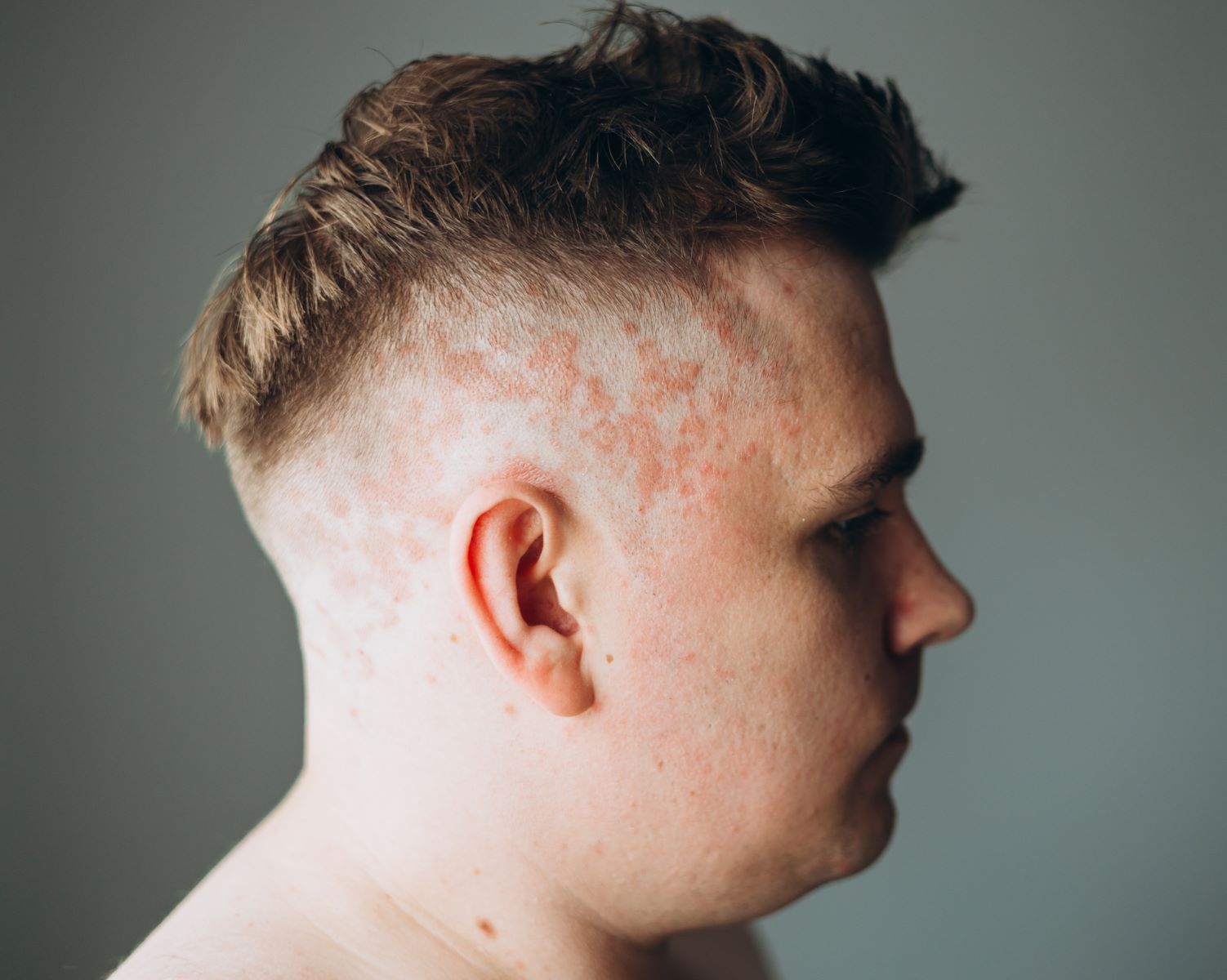
Symptoms: Thickened, inflamed, red, dry and itchy skin patches that can flake, crack and bleed. In some cases, small, fluid-filled blisters can form or a weeping rash may develop.
Contact (allergic) dermatitis
Contact dermatitis occurs when your skin is exposed to a substance you are allergic to. It occurs in almost 20% of the European population [13]. On the scalp, contact dermatitis is often a reaction to an ingredient of a hair product, the metal part of a hair accessory (e.g. nickel), or the fabric of a hat or scarf.
While most allergic reactions are mild, severe ones can cause anaphylaxis which is life-threatening. Be sure to contact emergency services immediately if you are feeling very ill or having trouble breathing alongside other symptoms of contact dermatitis.
Causes: There is a genetic component to allergic dermatitis, but it is also influenced by environmental factors, such as repeated exposure to certain irritants. People who experience atopic dermatitis are also more likely to develop allergic eczema, as it’s easier for allergens to penetrate the damaged skin barrier [13].
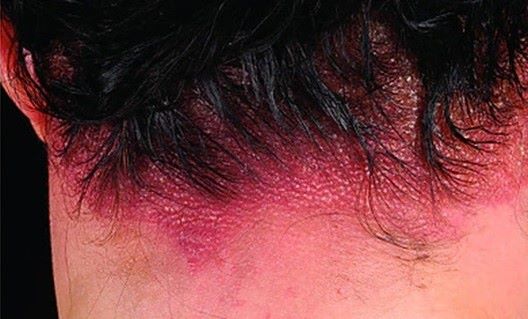
Symptoms: Scalp inflammation, redness and swelling, accompanied by itching, burning and tenderness. In some cases, a rash or blistering, oozing sores may also develop [13]. Severe forms can cause breathing difficulties and chest tightness (these symptoms require emergency medical attention).
How do you treat scalp eczema hair loss?
Hair loss caused by scalp eczema usually resolves on its own once this condition has been treated and the flare-up has ended. Mild cases will often resolve on their own over time. However, more severe or persistent flare-ups that cause hair loss may require medication. Here are the most common treatments for the main kinds of scalp eczema.
Seborrheic dermatitis treatment
The first thing you can try is to treat seborrheic dermatitis at home using a medicated shampoo containing ketoconazole (e.g. Nizoral shampoo for hair loss), selenium sulphide, salicylic acid, coal tar, tea tree oil for hair or zinc pyrithione [11] [14]. If that does not work, your dermatologist may prescribe anti-inflammatory medication, such as steroid creams or calcineurin inhibitors [11]. They may also recommend oral antifungal medication.
Atopic dermatitis treatment
The first line of treatment for mild atopic eczema includes emollients (lotions that soften the skin) and topical steroids to reduce scalp inflammation. More severe forms may require medication to reduce immune system reactivity, such as calcineurin inhibitors.
Your healthcare provider may also recommend oral antihistamines to reduce scalp itchiness and/or oral antibiotics to prevent secondary infections in the affected areas [12][14].
If you have atopic dermatitis, it is important to determine whether you have any allergies and protect yourself from potential triggers. These may include known allergens and irritants, respiratory infections, stressful periods, cold weather, and shampoo with harsh chemicals.
Contact dermatitis treatment
The best way to prevent allergic dermatitis of the scalp is to be aware of your sensitivities and check the ingredient list of the hair products you use. However, once eczema has developed, you need to clean the exposed area of the scalp well using warm water and a gentle shampoo.
Taking an oral antihistamine can reduce scalp itchiness, while an emollient cream can help prevent dryness. If the allergic reaction persists, you may need to use steroid creams to help it subside [13][14].
While very rare, severe allergies can be life-threatening. So if you notice severe scalp and face swelling, chest tightness or difficulty breathing, contact emergency services immediately, as you may need to receive injectable adrenaline, oxygen and/or other hospital-grade medication to support breathing [15].
What other conditions can be mistaken for scalp eczema?
Several common scalp problems can be mistaken for scalp eczema, which is why it is a good idea to see a dermatologist or a trichologist when you experience persistent symptoms. Here are some of the most common conditions that have symptoms resembling those of eczema.
Dandruff
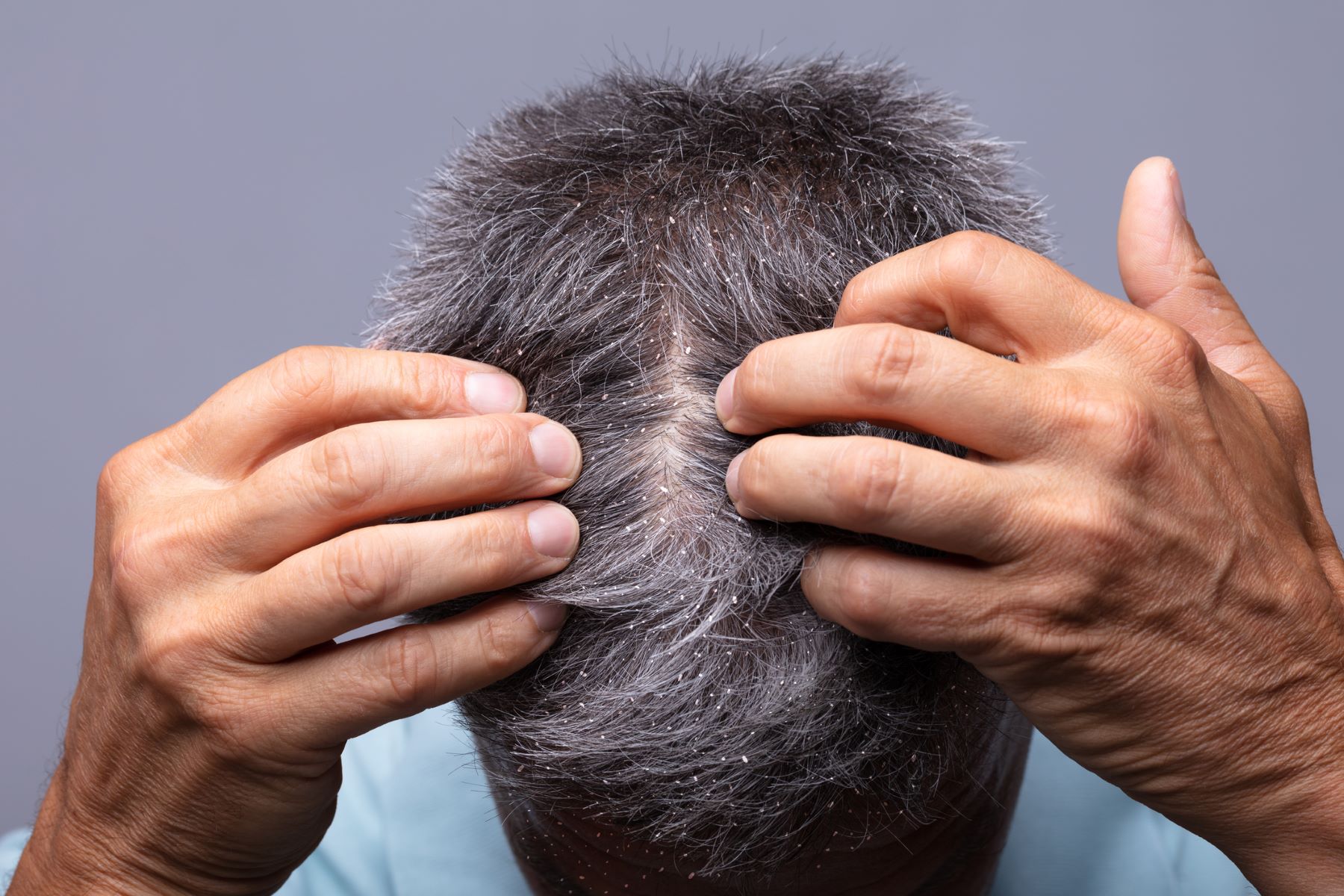
Dandruff can be caused by the same fungus as seborrheic dermatitis, but it can also be a result of other conditions, such as a dry scalp. Seborrheic dermatitis can also affect other parts of your body (face, trunk, armpits), while dandruff only affects the scalp. Finally, dandruff is not accompanied by scalp inflammation [16].
Symptoms: fine, dry, white or grey flakes on the scalp, mild itching.