Are hair extensions for men different from those for women?
While hair loss is more common in men than in women, there are no significant hair anatomy differences between the sexes [3]. So both men and women can wear the same kinds of hair extensions, which can be styled for either feminine or masculine looks.
While some hair extension brands may market product lines specifically for men, there is no need to seek these out or pay extra for them. You can successfully use any good-quality product that matches your natural hair in colour and texture.
Why do men wear hair extensions?
There are several reasons why some men choose to wear hair extensions. Here are some of the most common:
- Extensions make your hair look fuller and more voluminous.
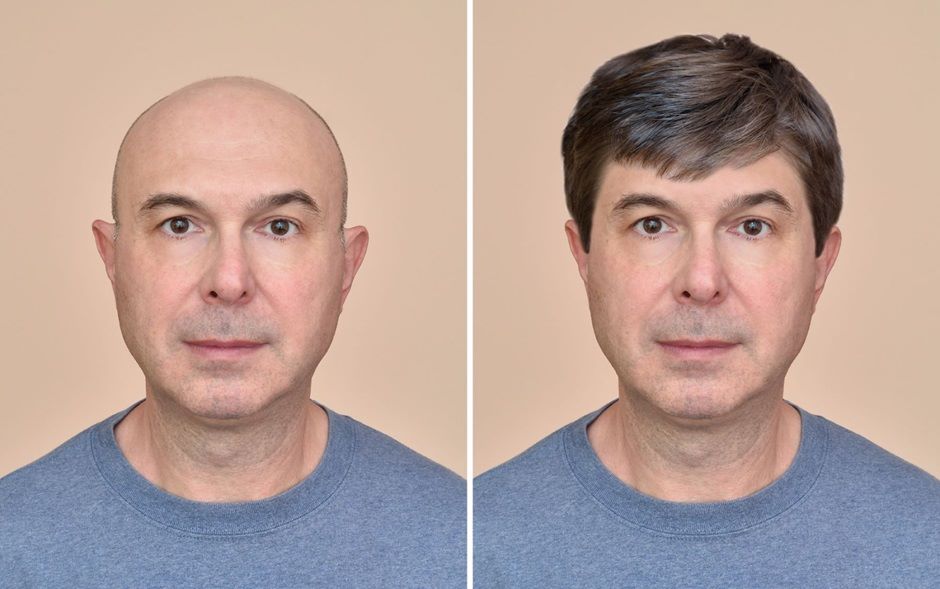
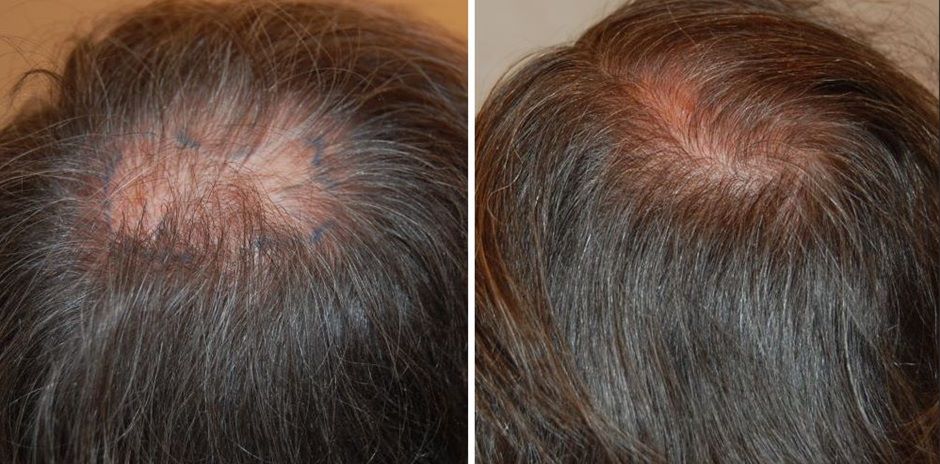
- They can cover up bald spots on their crown or another part of their scalp.
- They can wear a longer hairdo on special occasions.
- Some men want to try out different hairstyles without committing to them.
- Extensions give you the flexibility to wear highlights without dyeing your hair.
Choosing the right type of hair extensions for men
When searching for the perfect hair extensions, you need to keep in mind the following characteristics and choose the type of product that suits you best.
Material
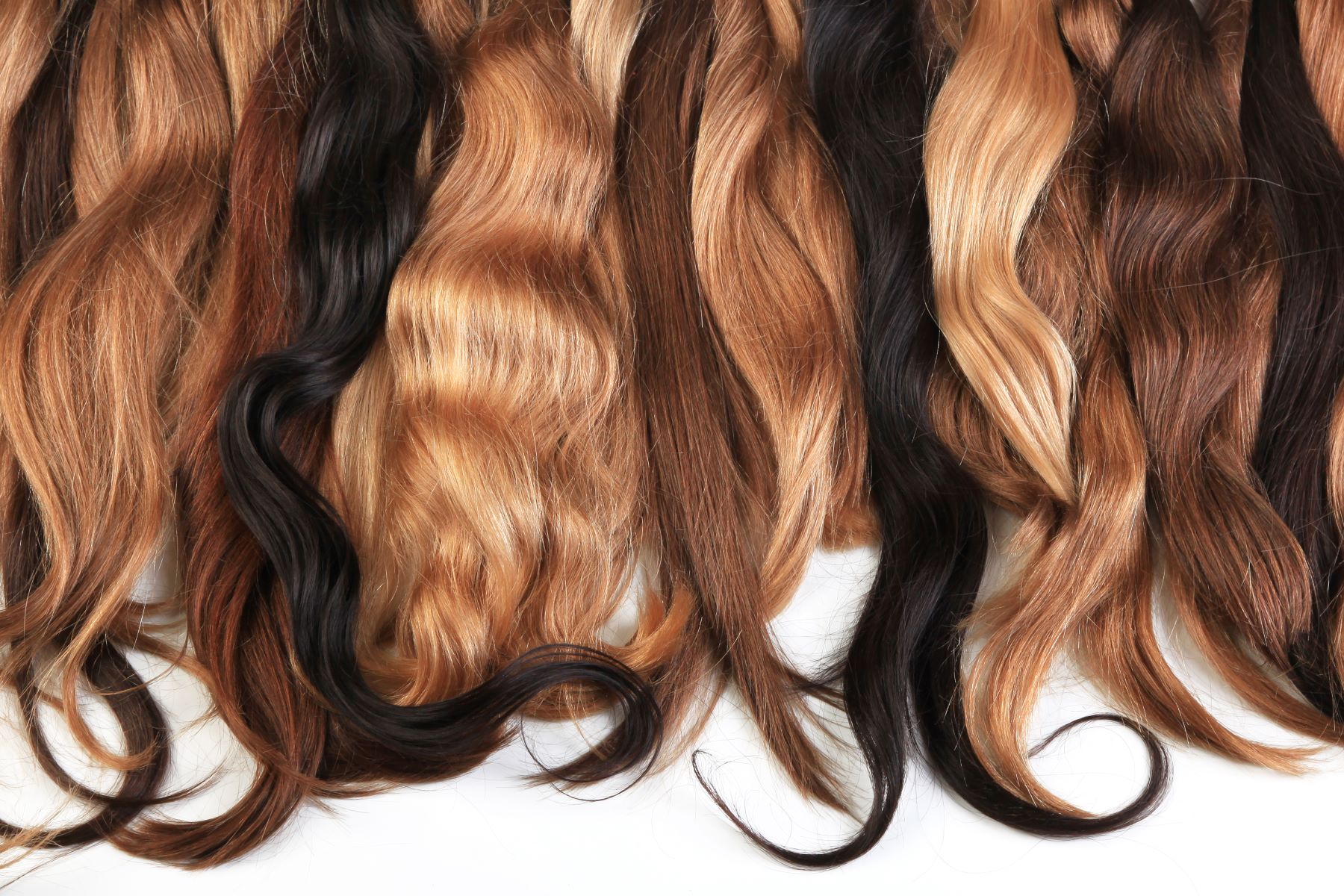
Some hair extensions are made from synthetic hair, while others use natural strands [2]. While synthetic extensions are normally cheaper, they are also more conspicuous and don’t always look very natural. Those made from natural hair can cost substantially more, but they are usually of better quality. They’ll blend in better with your hair and last longer.
Strand distribution
You can opt for weft extensions, where the hair is distributed along a fabric strip, which is then attached in its entirety to your natural hair (several rows are usually applied). Or you may prefer some more natural-looking and easy-to-blend-in individual lengths that attach to your hair wherever you feel like you might benefit from additional volume.
Attachment system
There are several ways to attach the hair extensions to your scalp:
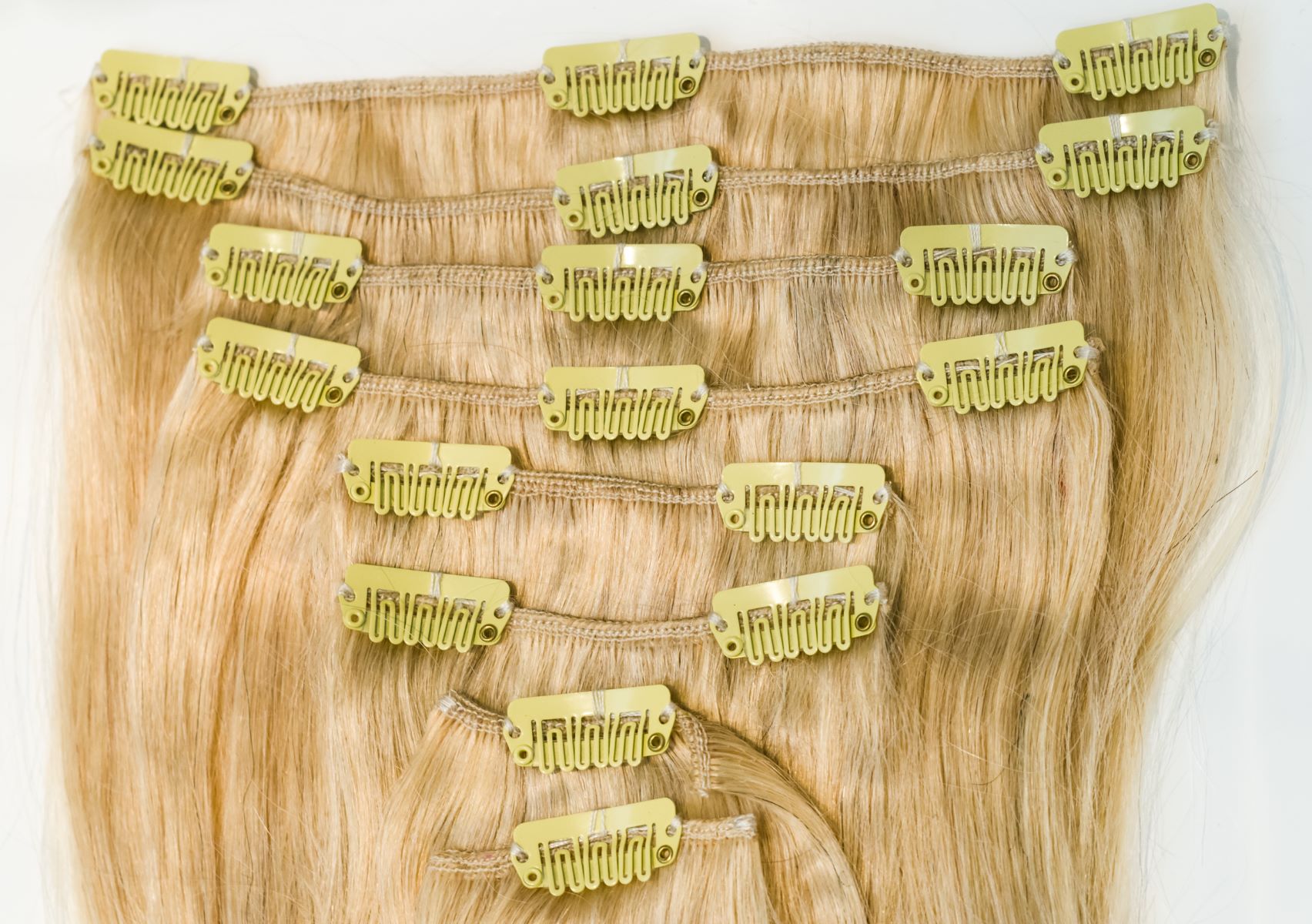
- Clip-on hair extensions – wefts of hair connected to clips that can be easily attached to your hair.
- Tape-in hair extensions – small wefts of hair connected to double-sided adhesive that sticks to your natural hair.
- Sew-in (weave) extensions – the wefts are sewn into braided sections of your hair.
- Glue-in hair extensions – wefts are attached to your hair with a special glue.
- Hand-tied hair extensions – small, light hair bunches tied manually to your natural hair.
- Fusion (keratin bond) extensions – keratin is applied to extension strands, which are then fused to your hair using heat or ultrasonic waves.
- Micro-Link (bead) hair extensions – extension strands have small beads at the tips which are clamped to your natural hair.
- Halo hair extensions – a long weft of hair is placed on one side of a flexible circular wire, which is then placed snugly on your crown without needing to be attached.
Length
Remember that you don’t need to use your extensions at their full length; you can always trim them if necessary. However, here are the standard hair extension lengths:
Short (30-35 cm) – ideal hair extensions for thickness boosting in shorter haircuts, and covering thinning spots.
Medium-length (40-45 cm) – great for creating styles that reach your shoulder blades.
Long (50-55) – these extensions will reach down to your mid-back, so you should have long and somewhat full hair to begin with.
Extra long (60-75) – very long extensions can be quite heavy and require extra long and thick natural hair to begin with. They will reach down to your waist.
Ideally, you should opt for a hair extension length that does not exceed your natural hair length by more than 10 cm, to make sure it blends in properly.
Duration
Hair extensions can be temporary, semi-permanent, or permanent. Temporary extensions are ideal for special occasions. Others allow you to wear them for days on end, without having to remove them. Here is what you can get:
- Temporary hair extensions: clip-on or halo extensions that are easy to put on or remove at home whenever you like.
- Semi-permanent hair extensions: tape-in extensions, sew-in weaves or hand-tied wefts are typically worn for 6-8 weeks before needing to be refitted or reattached.
- Permanent hair extensions: Fusion and micro-link extensions can be worn for 3 months or more without needing refitting or reattachment.
Colour, texture and style
Hair extensions come in various shades and textures, so you can select those that are closest to your natural hair. (Or, if you are feeling adventurous, you can opt for bright colours that will stand out.)
Some extensions (especially clip-ons) are pre-styled, so all you need to do is apply them. Others will require a trip to the salon to blend and cut into your favourite style.
Can hair extensions for men cause hair loss?
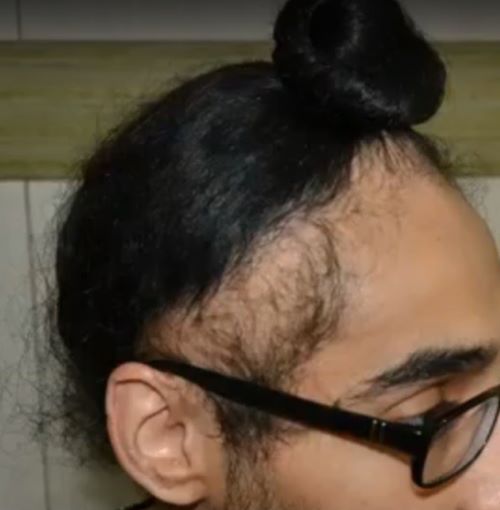
Yes, wearing hair extensions can cause hair loss, especially if they are heavy and worn for prolonged periods (e.g. permanent or semi-permanent extensions). That is because they pull on your hair follicles, damaging them over time to the point where they cannot produce new strands.
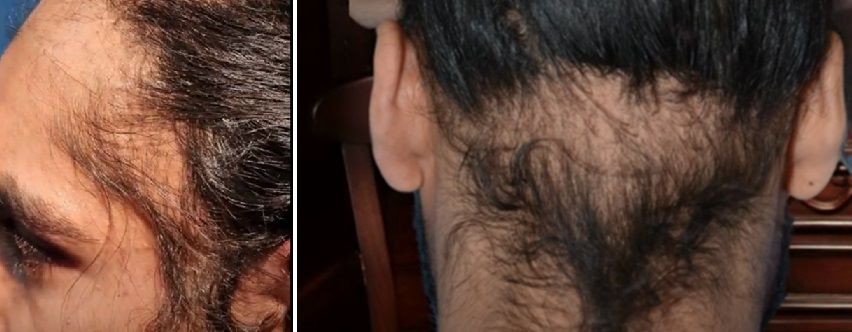
This is a condition called traction alopecia and it occurs at the points where extensions are most often attached: around the fringe, or in a distinctive horseshoe pattern at the back of the head [2][4][5].
Fortunately, in most cases, traction alopecia is temporary and resolves itself a few months after you stop wearing hair extensions [6]. Hair loss medication, such as Minoxidil, can help promote hair growth if necessary [7].
However, in rare, severe cases, hair extension-induced alopecia can become permanent. If that happens, a hair transplant may be your best option to restore your hair [8].
Finally, synthetic hair extensions and glue used to attach these products can also cause common scalp problems, such as contact dermatitis [2][9][10]. This can lead to temporary, localised hair shedding. If you develop a rash, swelling, itching, pain or inflammation while wearing extensions, take them off as soon as possible and stop using the product.
Tips for preventing hair loss from extensions
If you would like to wear hair extensions without having to worry about developing traction alopecia, here are some things you should keep in mind:
- Opt for halo extensions, which cause no traction alopecia.
- Use temporary, clip-on hair extensions and wear them briefly.
- Avoid wearing extensions longer than twice the length of your natural hair [2].
- Align the extensions in the same direction as your natural hair (root to tip) [2].
- If you need permanent or semi-permanent extensions, wear shorter, lighter variations. Get them lifted regularly, as extensions sliding down the hair shaft can cause more damage to the follicle.
- Take regular breaks from wearing hair extensions.
- Avoid re-attaching your extensions repeatedly to the same rows of natural hair.
- Use Minoxidil to strengthen your hair follicles.
- Remove your hair extensions at the first sign of hair thinning and balding.
How men can apply hair extensions
Different kinds of hair extensions require a different application process. A few are easy to put on or take off by yourself at home, while others require a salon fitting, attaching and removal. Here is how you can apply the main types of hair extensions.
Applying clip-on hair extensions
These extensions are very easy to use. All you need to do is use the clip connected to the hair wefts to secure them to your hair, close to the roots. Then, you can use a straight razor or scissors to trim them down to the desired length and shape. Here is a tutorial on how to apply them:
Applying halo hair extensions
Halo extensions can also be applied at home. The weft is attached to a flexible loop of wire that resembles a fishing line. You need to place the halo on your crown and adjust the loop to the size of your head (the line will keep it comfortably in place). The weft will surround the back and sides of your head. Then cover the loop with some of your natural hair or another extension to mask it. Watch this video to learn more:
Applying other types of hair extensions
All the other types of hair extensions require professional assistance to apply. So the best thing you can do is to find a nearby salon with great customer reviews and let the stylists work their magic on your hair.
Can men attach extensions to very short hair?
No, since extensions need to be attached to your natural hair, you can’t wear them with a buzz cut. You need to have at least 10-15 cm of hair length to accommodate them properly.
That means they’re not suitable for short male hairstyles, only on medium-short length ones at the least. If your hair is too short, the extensions won’t blend in naturally with your hair, making them very noticeable.
It is also best to wear extensions that are a similar length to your natural hair to ensure a good blend.
How much do hair extensions for men cost in the UK?
The price of hair extensions can vary widely, depending on the number of pieces you need, the type of hair you opt for, the desired length, fullness, attachment system and additional style features. Here are some examples:
- Synthetic clip-ins are the least expensive, only costing around £20-60, while human hair extensions can amount to £70-175.
- A pack of 50 cm human hair weft extensions can set you back £80-160, with installation costing around £30. You’ll also pay a £20 refitting charge for follow-up appointments.
- A pack of 50 cm human hair tape-in extensions can cost between £120 and £175, but you will also likely need to pay around £50 per pack for installation and another £25 for removal/refitting.
- A pack of 50 cm micro-link hair extensions can amount to £90-150. However, fittings can cost an additional £70, while removal/refit adds £50 to your total.
Overall, on average, you can expect to pay between £100-500 for a set of hair extensions in the UK. However, you may encounter additional costs for extra styling services, maintenance, refitting and removal.
How long do hair extensions for men last?
The amount of time your hair extensions will last largely depends on the materials they are made of and their attachment system.
Extensions made of synthetic hair are less resistant and will only look good for about a month of constant use. However, since you can easily take them off, you can wear them sparingly to increase their lifespan.
However, hair extensions made of natural hair can last between 3 months and a year. You can expect to wear your fusion (keratin-bonded) extensions for 3-6 months. Tape-in extensions can last for 5-7 months, while hand-tied weft extensions can look great for 7-12 months. But keep in mind they will likely need to be refitted or reattached during this time.
If you want to keep your hair extensions looking better for longer, remember to clean them regularly, brush them gently and avoid heat styling. This is very important since it’s almost impossible to fix heat-damaged hair, especially on extensions (synthetic hair can be destroyed by this styling practice).