Human hair anatomy and physiology
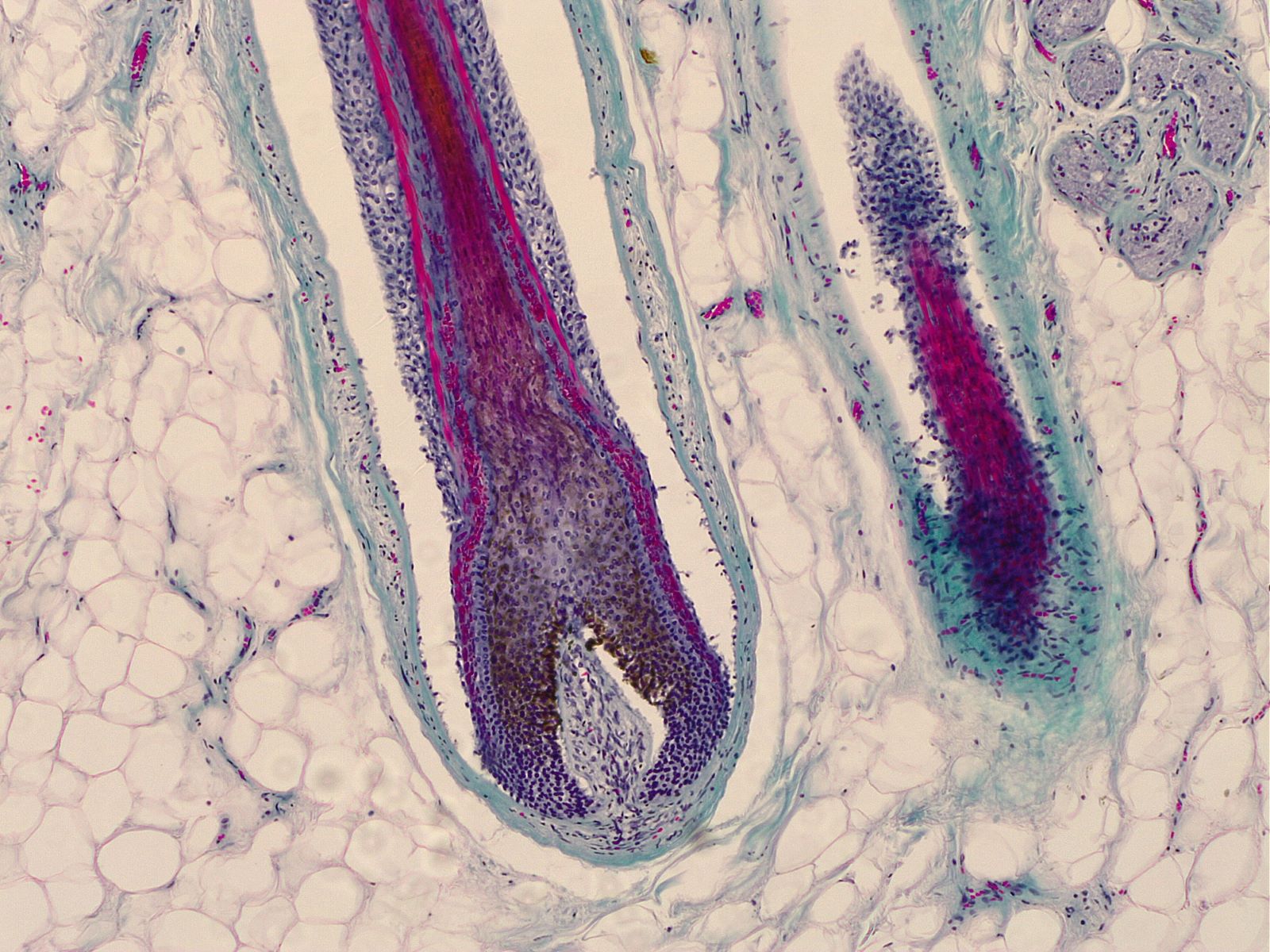
Like all mammals, humans are covered in hair. This serves a number of different purposes, from protection against the elements and heat regulation to communication and aesthetics. Human hair grows from our skin and scalp and has 2 central structures: the hair follicle and the hair shaft, each with its distinct anatomy [2].
The human hair diagram
This hair diagram presents an accurate depiction of human hair anatomy, making it easier to visualise its components. Learn more about each individual component below:
Hair follicle anatomy
The hair follicle is a tubular or sheath-shaped mini-organ found beneath your skin. It’s made up of several structures with roles in hair production and nourishment [2][3]:
- The dermal papilla – this structure is located at the base of the hair follicle, supplying it with oxygen and nutrients from small blood vessels. It also regulates hair production by sending growth signals to the cells in the hair bulb. Finally, the dermal papilla determines your main hair properties, such as thickness, colour or texture [1][4].
- The hair bulb – this constitutes the lower, rounded part of the hair follicle, which also includes the dermal papilla. It is where hair growth starts, as cells that will make up the hair strand start dividing here. It also contains melanocytes, the cells that produce our hair colour.
- The hair root – this is the lowest part of the hair strand, which rests under the skin. It starts at the top of the hair bulb and grows upwards as the hair cells divide. The hair root ends once it reaches the surface of the skin, where the hair shaft begins.
Each hair follicle is also connected to:
- A sebaceous gland that produces the natural oil coating the skin and hair.
- A hair erector (arrector pili) muscle, which allows the strands to become raised. This muscle contracts when we are cold, angry or scared, giving us goosebumps.
- Nerve fibres, which make it hurt when a strand is plucked out [1].
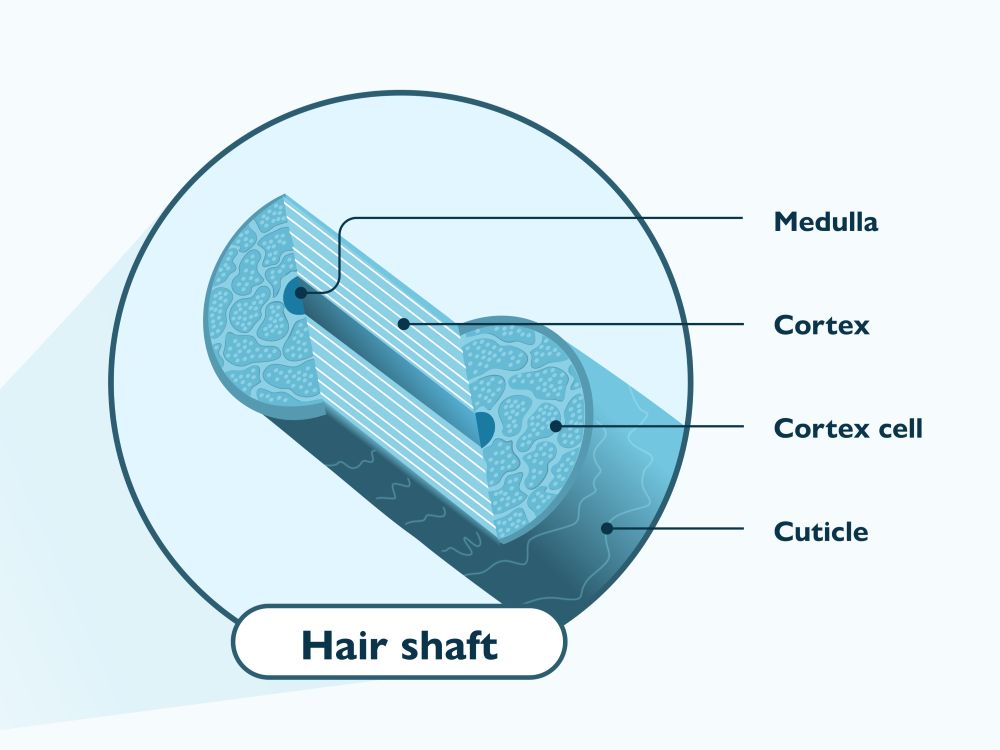
The hair shaft diagram
This is what a strand of your hair looks like in cross-section, highlighting its main components:
Hair shaft anatomy
The hair shaft is the part of the strand that grows above the skin surface. It is mostly made up of keratin (65-95%) and has no biochemical activity, which is why it is classified as metabolically “dead” (just like your nails).
The hair shaft is not as structurally complex as the hair follicle, but it is comprised of 3 major parts [5]:
- The cuticle – this protective shell is composed of 6-10 overlapping layers of interlocking cells that act as a barrier to physical and chemical damage. It is smooth and flat when intact, but its edges can start to swell, lift and crack when your hair is exposed to heat or harsh chemicals.
- The cortex – the bulkiest portion of the hair shaft, the cortex takes up 75% of the hair area. It is made of long, thin, closely packed cells filled with protein and provides resilience against mechanical damage. Melanin cells are scattered between them, giving the hair shaft its colour.
- The medulla – This part of the shaft is only found in the core of terminal hairs, such as those on the scalp. It is made of spongy keratin and plays little role in the mechanics of human hair (though a larger medulla can make the strand more brittle).
What is the chemical composition of hair?
Most of our hair is made of protein. However, it also contains other components. Here is what each strand is made of [5]:
| Chemical molecules in the hair strand | The elemental composition of the hair strand |
- Protein (65-95%)
- Water (10-30%)
- Lipids (fat) (4%)
- Melanin (4%)
- Carbohydrates (1%)
| - Carbon (50%)
- Oxygen (22%)
- Nitrogen (16%)
- Hydrogen (7%)
- Sulphur (5%)
|
The hair growth cycle diagram
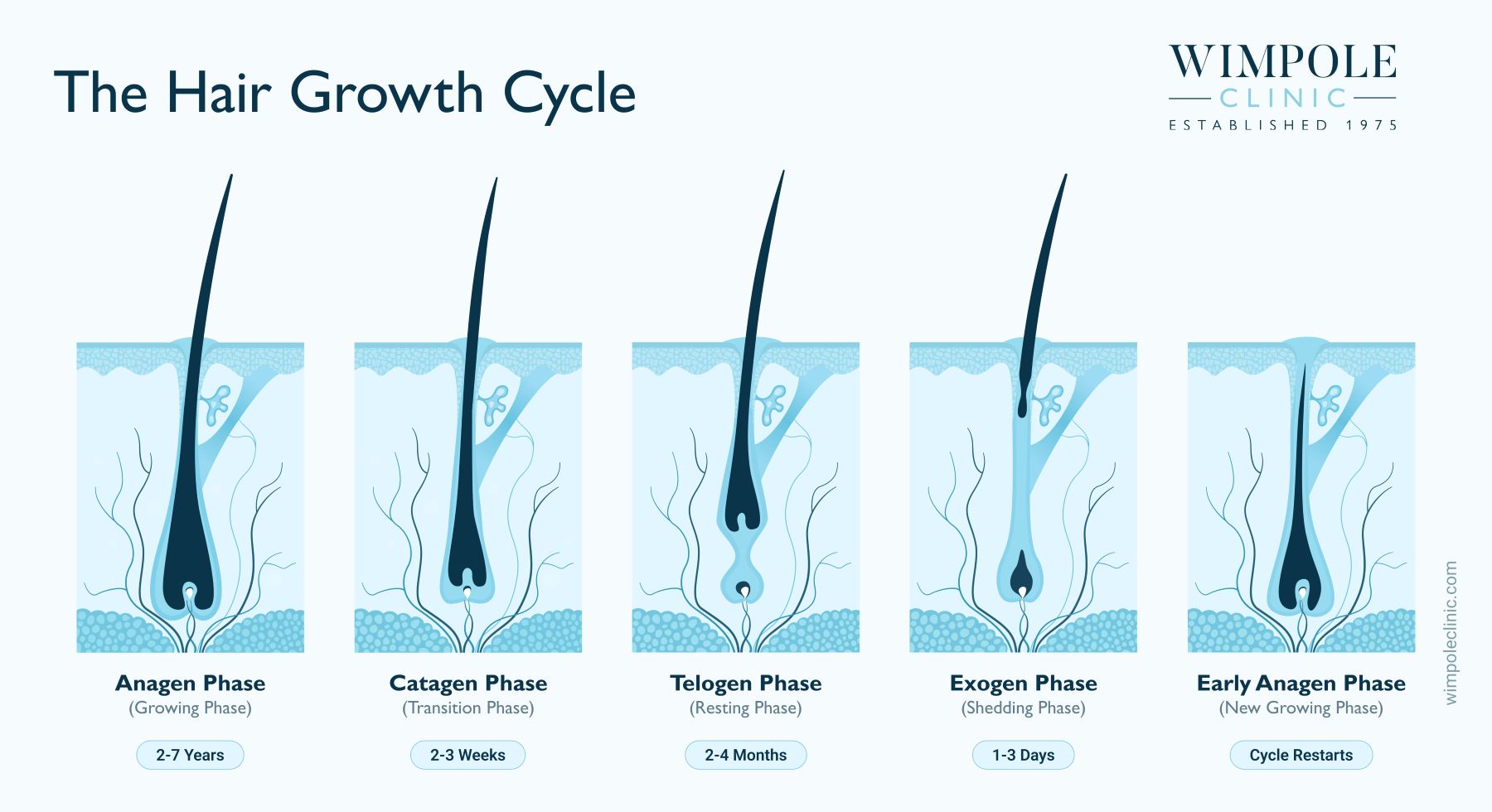
Human hair development undergoes a cycle which has 4 distinct phases before resuming, as detailed by the following hair diagram [1][2][5]:
- The anagen (growth) phase – this is the longest phase, where the strands are growing. This ranges from a few months for facial hair to 2-7 years for scalp hair. Most of your follicles (80-90%) are in this phase at any given time.
- The catagen (transition) phase – only 5% of your hair follicles are in this intermediary stage, as the strands stop growing and detach from the blood supply. The follicles spend 2-3 weeks in this phase, preparing to make the transition to the resting stage.
- The telogen (resting) phase – 10-15% of your hair is resting at any given time, as it is receiving no further blood flow to help it grow, but it is not falling out yet either. This stage normally lasts between 2-4 months.
- The exogen (shedding) phase – This final phase is very short, lasting just 2-3 days. It involves actively shedding the hairs that had been resting, in preparation for the beginning of the next growth phase, where new strands would develop.
Different hair follicles on your scalp and skin can be in different stages of their growth cycle. When this cycle progresses normally, with no disruptions, the ratio of growing to shedding hair is high enough that any hair loss doesn’t produce visible hair thinning.
6 ways hair anatomy changes can lead to hair loss
There are several ways in which your hair follicles can be damaged, leading to hair loss. Some of these are temporary, while others require treatment to improve. Here are some of the most common.
Hair loss through hair follicle miniaturisation
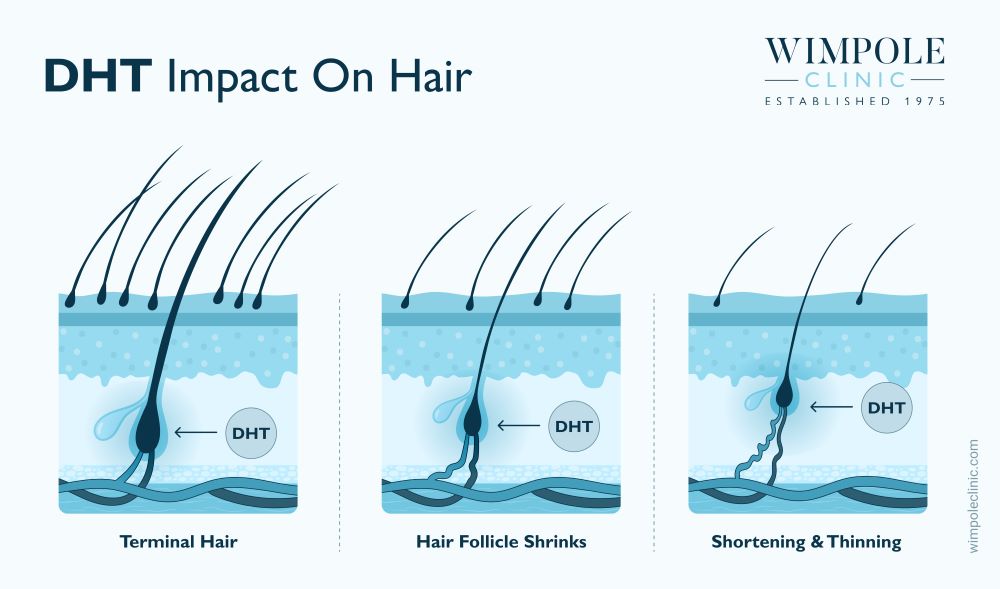
Some people (especially men) produce an excessive amount of a male hormone called dihydrotestosterone (DHT), while others are genetically more sensitive to DHT. DHT binds to androgen receptors in the dermal papilla cells at the base of the hair follicles and it makes them shrink. It does so by decreasing the levels of certain growth factors needed to ensure good blood flow to the hair follicle. This deprives your hair of the oxygen and nutrients it needs to grow healthy.
Moreover, it also increases the production of inhibitory factors which induce programmed cell death (apoptosis) in your hair follicles. This makes the affected ones start to produce shorter, finer hairs (vellus hairs), until they become unable to produce new hair at all.
The progressive hair loss associated with this process is known as male pattern baldness or female pattern hair loss [6]. It is the most common type of alopecia worldwide, affecting 85% of men and 55% of women at some point in life [7][8].
Autoimmune hair loss
Sometimes, the immune system becomes overactive and your white blood cells attack your hair follicles, damaging their structure and preventing them from producing hair [9]. Specifically, your immune system attacks the cells of the dermal papilla in your hair follicles, but also the keratinocytes (the cells that produce keratin) and melanocytes (the cells that produce pigment).
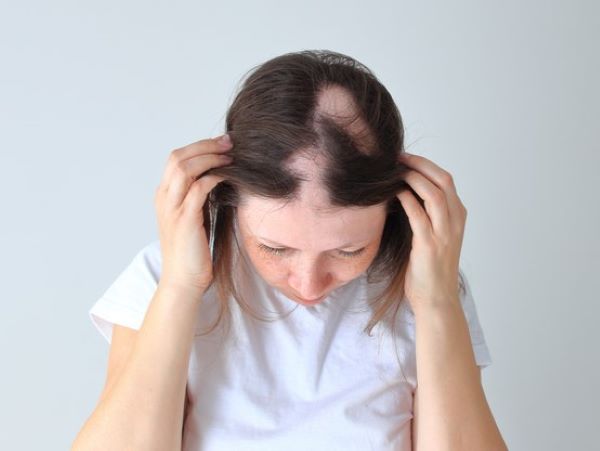
This forces your hair follicles into a premature catagen phase, followed by an extended telogen phase. Thus, hair production stops and existing hair falls out in the affected areas. This can result in patchy hair loss on the scalp, face, and/or body known as alopecia areata, or in other autoimmune conditions, such as frontal fibrosing alopecia.
Alopecia areata is the most widespread form of autoimmune alopecia, affecting 2% of the worldwide population [10]. Milder forms of this condition often resolve spontaneously, usually within a year of onset, only to flare up again at a later date. However, more severe ones may require steroid treatment to improve.
Hair loss caused by infection
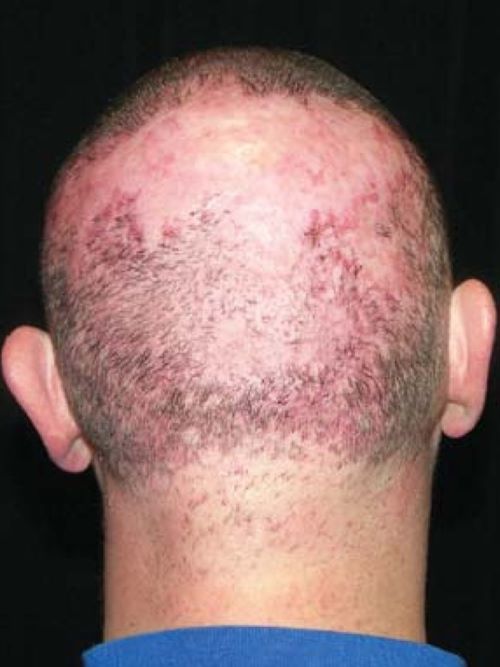
Common scalp problems, such as hair follicle infections caused by fungi or bacteria, can produce inflammation around the follicle, damaging it and loosening its grip on the hair strand root, which becomes easier to pull out. Scalp folliculitis and other infections trigger an inflammatory response in the affected hair follicles.
Inflammatory response is a type of immune response aimed at destroying infectious agents and damaged tissues. However, the inflammation can damage the hair follicle structure itself, disrupting its ability to support hair growth. If left untreated, infections can become severe and cause scarring alopecia [11]. This means the hair follicles are completely destroyed and scar tissue forms in their place.
Moreover, bacterial infections can lead to pus accumulations within the hair follicle, leading to blockage. This blockage can prevent the normal outflow of the hair shaft, resulting in hair loss. The inflammatory response can lead to scabs or crusts forming around the follicle, which may also physically obstruct the hair’s growth. The stress of an active infection and inflammation can lead to telogen effluvium, a condition that makes hair follicles prematurely enter the resting phase.
Milder infections, such as uncomplicated scalp folliculitis, can be easy to treat with home care. However, if they don’t resolve (or they worsen) within a few days, see your healthcare provider, as you may need medication to prevent the infection from spreading.
Mechanical hair loss
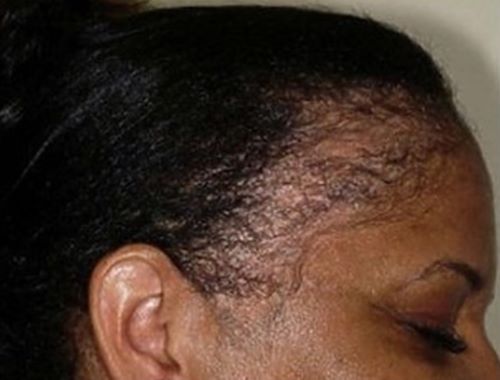
Wearing tight hairstyles for prolonged amounts of time can apply excessive tension to the hair follicle, damaging it and preventing it from producing hair. This results in a temporary condition called traction alopecia [12], which occurs mostly around the areas of the scalp (or beard) where the most tension is applied (e.g. the fringe area).
This condition tends to resolve itself in a few months when the hair follicles have had a chance to regenerate.
Consistently pulling your hair out can also cause mechanical hair loss, by damaging the inner structure of the hair follicles. This can be caused by psychological conditions, such as trichotillomania [13], or cosmetic procedures such as overplucking your eyebrows. Hair normally grows back within a few months if these practices are stopped.
Finally, not all your strands fall out from the roots. If you have dry, brittle hair, you may experience a significant amount of hair breakage. If enough of your strands break off, you could start to see hair thinning, even if you are not experiencing alopecia. This is seen more frequently in people with heat-damaged hair or in those who overuse hair products with harsh chemicals (e.g. hydrogen peroxide or ammonia).
In most cases, trimming damaged hair is the only way to repair it. However, milder cases may be fixable with a thorough hair detox.