



Medically reviewed by
Dr Barry Abdelrahimsai (GMC) — Updated on July 24, 2026
Dr Barry Abdelrahimsai (GMC) — Updated on July 24, 2026
What to do if your hair is not growing
If you’re concerned about your hair not growing, or you want your hair to grow more quickly, there are a few different things you can do. Some home remedies — such as rosemary oil and scalp massages — have been shown to stimulate hair growth [6-7].
However, if you’re serious about getting your hair to start growing back again, topical and over-the-counter solutions may be more appropriate for your situation.
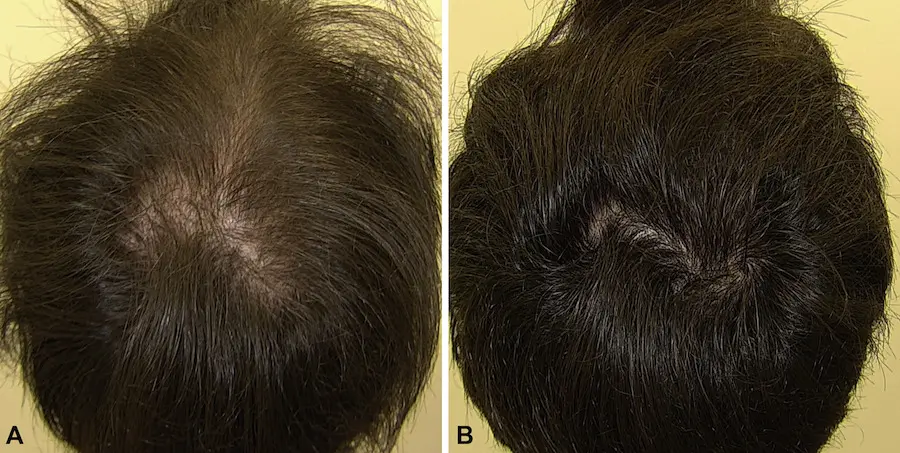
DHT blockers such as Finasteride and Dutasteride are proven to help men experiencing male pattern baldness. Minoxidil, meanwhile, can help treat a range of hair loss conditions, so it can be used by people who are experiencing hair loss or struggling to keep their hair growing naturally. See photos of Finasteride results to see what you can expect from this type of treatment.
However, for some people who discover that their lack of hair growth is down to a more severe condition where normal solutions and treatments aren’t going to work, they can also consider choosing to get a hair transplant.
Hair transplants are a safe and effective way to permanently restore your hair. To find out more, get in touch with a friendly member of our team today. Book your free consultation with the Wimpole Clinic.

Medically reviewed by Dr Barry Abdelrahimsai (GMC)
— Updated on July 24, 2026
The Wimpole Clinic offers FUE Hair, Beard & Eyebrow Transplants & Trichology.
Talk to a specialist ☎ 020 7935 1861.
Talk to a specialist ☎ 020 7935 1861.
Medically reviewed by
Dr Barry Abdelrahimsai (GMC) — Updated on July 24, 2026
Dr Barry Abdelrahimsai (GMC) — Updated on July 24, 2026
Book Your Free Hair Transplant Consultation
Simply fill in your details and we’ll get in touch with you shortly.