Which hormones cause or contribute to female hair loss?
Female hair loss is notoriously hard to diagnose. There are often many contributing factors, including diet, styling choices, and medical conditions. But it’s common for hormones to play a part in women’s hair loss — here are the hormones that can cause or contribute to hair loss in women.
Dihydrotestosterone (DHT)
Dihydrotestosterone is a male sex hormone (or androgen), but women also produce DHT. DHT levels in women are lower than those in men, which is why FPHL is less common than male pattern baldness.
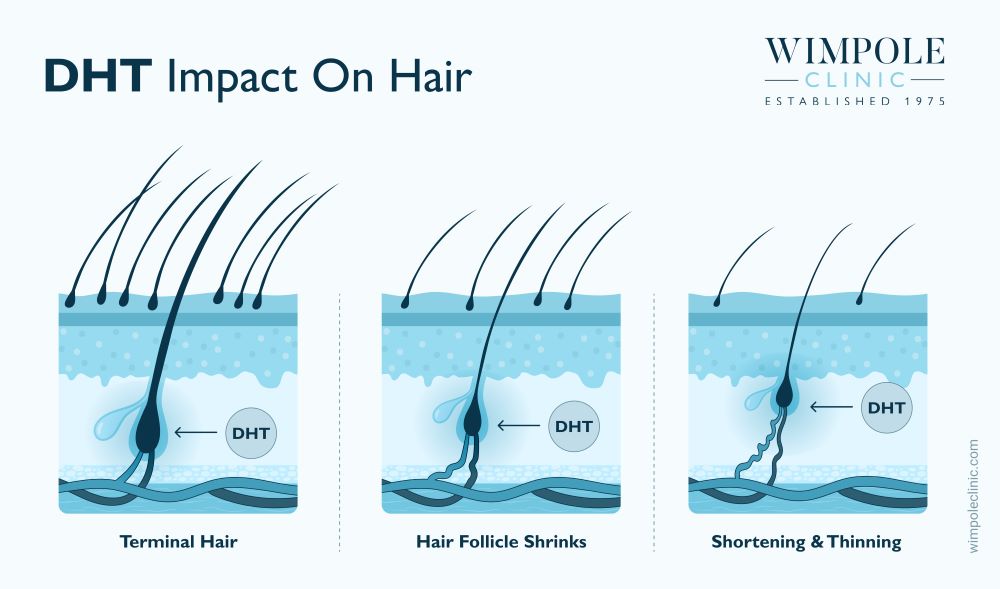
Despite this, DHT is the biggest hormonal factor in the development of female pattern hair loss. DHT binds to androgen receptors in the hair follicles, causing them to become smaller. Eventually this miniaturisation process causes the follicles to stop producing hair.
After menopause, your female sex hormone (oestrogen) levels drop, but your DHT levels stay the same (or even increase). This explains why you’re more likely to develop hair loss during and after menopause [2].
Androstenedione and testosterone
Like DHT, androstenedione and testosterone are androgens. In women, a significant proportion of the testosterone you produce is synthesised from androstenedione [3]. Testosterone is then converted to DHT. So high levels of these hormones can also result in increased hair loss in women.
However, these androgens are also converted to oestrogens by an enzyme called aromatase. Oestrogens have a positive effect on hair growth, so if you’re genetically predisposed to higher aromatase activity, you may not experience much hair loss even after menopause.
Cortisol
Cortisol is a steroid hormone that regulates your stress response. Multiple studies have found a link between higher levels of cortisol and hair loss [4-5]. One found that cortisol concentrations in hair closest to the root corresponded to changes in hair growth rate, suggesting cumulative stress exposure can impact hair growth [5].
Stress-related hair loss is known as telogen effluvium. This type of hair loss is usually diffuse rather than patterned, and you may notice more hair falling out in the shower or on your pillow after a particularly stressful period or event. Hair loss has been associated with bereavement, grief, and other stressful experiences [6]. In addition, women with female pattern hair loss may have higher cortisol levels than those with healthy hair [4].
Thyroid gland hormones
Thyroid disorders and hair loss have been strongly linked, with diffuse hair loss on the scalp, body, and face all recognised as signs of clinical thyroid deficiency [8-9]. Hair loss can be a symptom of an overactive thyroid (hyperthyroidism) or an underactive thyroid (hypothyroidism) [10].
Thyroid hormones are said to play a role in several different types of alopecia, including telogen effluvium, alopecia areata, and androgenetic alopecia [8]:
- One study found that almost a third of women with female pattern baldness also had hypothyroidism [8].
- Around 5% of alopecia areata patients have borderline hypothyroidism related to Hashimoto’s thyroiditis.
- In those with telogen effluvium, an underactive thyroid can make hair brittle and dull, while an overactive thyroid can reduce the tensile strength of your hair.
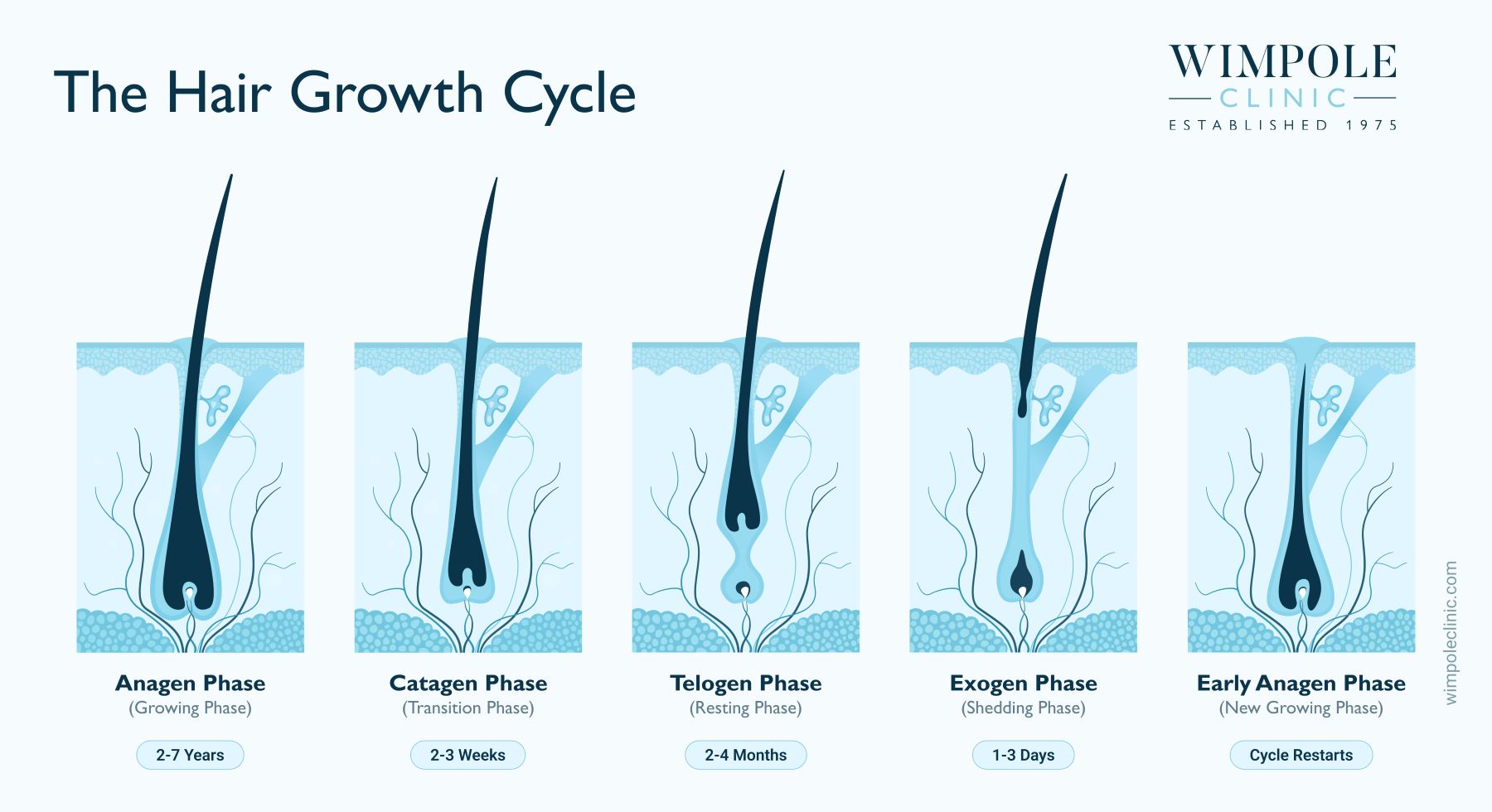
Thyroid gland hormones can increase the percentage of hairs in the resting (telogen) phase of the hair growth cycle, and reduce average hair diameter in women [8]. Even slight or mild changes in thyroid hormone levels can significantly alter hair growth, keeping the follicles in the shedding phase for long periods and damaging hair texture.
That said, thyrotropin-releasing hormone (TRH) — a hormone that releases thyroid-stimulating hormone — can promote hair shaft elongation and extend the growth phase of the growth cycle [11].
Prolactin
Prolactin is a hormone that contributes to breast development and lactation in pregnant women. But it may also have an effect on hair growth regulation by inhibiting hair shaft elongation and ending the growth phase of the hair growth cycle prematurely [3].
Studies have shown that women with high levels of prolactin may also have higher rates of hair loss [7]. However, researchers note that this hormone is unlikely to be the single active cause of hair loss unless you have extremely high levels of prolactin (known as severe hyperprolactinemia) [7].
Corticotropin-releasing hormone (CRH)
Corticotropin-releasing hormone (CRH) is involved in activating your stress response, increasing secretion of cortisol. But CRH in itself can inhibit hair shaft production and move hair follicles into the resting phase of the growth cycle prematurely [3].
Dopamine
Known as a key feel-good hormone, dopamine is released during pleasurable experiences. But unfortunately, high levels of dopamine may also contribute to hair loss in women. Lab studies have shown that dopamine can encourage follicles to enter the catagen phase prematurely and reduce melanin production in the hair follicle, affecting hair pigmentation and growth [12].
Galanin
Like most hormones, galanin has several functions in the body. It’s involved in learning, memory, pain response, and appetite regulation. But studies have shown that galanin can inhibit hair growth in lab settings, shortening the hair growth phase and reducing hair shaft elongation [13].
Which hormones boost hair growth in women?
Fortunately, some hormones can actively help with female hair growth. The following hormones have been shown to boost follicle activity and help keep your hair healthy.
Oestradiol and other oestrogens
Oestradiol is the most prolific female sex hormone in your body, and it has a positive impact on hair growth. Healthy levels of oestradiol and other oestrogens enable hair to continue growing at a normal pace.
Pregnant women have higher oestrogen levels, which prolongs the anagen phase of the growth cycle [14]. That’s why many women report healthier, thicker hair and reduced hair loss during pregnancy.
But this also works in reverse: during and after menopause, your oestrogen levels drop. This can contribute to the development of female pattern hair loss thanks to the imbalance between female and male sex hormones.
Progesterone
Progesterone is a necessary hormone for many female reproductive functions, including menstruation, ovulation, and pregnancy. This hormone can inhibit secretion of the luteinising hormone in women, which limits the production of certain androgens [3].
In addition, progesterone decreases the amount of testosterone that gets converted to DHT at the follicular level [3]. So higher levels of progesterone may prevent the development of female pattern baldness.
Melatonin and norepinephrine
Best known as an essential hormone for sleep, melatonin also regulates hair growth. It can increase the anagen phase growth rate and reduce oxidative stress [3, 17]. Oxidative stress plays a role in many types of alopecia, including alopecia areata and telogen effluvium. Another hormone, norepinephrine, stimulates melatonin production.
Studies suggest melatonin may help treat androgenetic alopecia in women [18]. Treatment with a cosmetic melatonin solution reduced hair loss in 59% of patients after just one month, rising to 66% after three months.
Somatotropin (human growth hormone)
Human growth hormone is essential for hair growth. In fact, an excess of growth hormone can actually cause unwanted body hair growth in women [15].
A rare condition known as Laron syndrome can cause alopecia. This happens when mutations in your growth hormone receptors prevent you from producing enough insulin-like growth factor 1 (IGF-1) in response to somatotropin production. IGF-1 is essential for maintaining the growth phase of the hair cycle, so inhibiting this growth factor can lead to sparse hair growth and increased shedding.
But this syndrome is extremely rare, with just 250 known cases worldwide [16]. So human growth hormone is more likely to cause excessive hair growth than hair loss.
When are you most likely to be affected by hormonal hair loss?
Hormones fluctuate at different stages throughout your life, making you more vulnerable to hormone-related hair loss at certain times [3]:
- Reproductive age — Thyroid problems can develop at this time, interfering with fertility as well as hair growth.
- Pregnancy — Postpartum hair loss, a type of telogen effluvium, is very common after pregnancy.
- Perimenopause and menopause — Perimenopausal hair loss is triggered by lowering oestrogen levels. It can lead to FPHL and development of facial hair in women.
Can hormone replacement therapy help with hair loss?
Hormone replacement therapy (HRT) is often prescribed to women going through the menopause to help manage their symptoms. This includes menopausal hair loss.
HRT helps with hair loss by increasing oestrogen and/or progesterone to rebalance your hormone levels. Most women just need to take one tablet each day to relieve their menopause symptoms. If this doesn’t work, other anti-androgen medications like spironolactone for hair loss may be prescribed.