What is Manual?
Manual offers a range of hair loss plans and individual treatments to boost hair growth. These include prescription and non-prescription medications (such as Finasteride and Minoxidil), specially formulated shampoo, and hair vitamins.
The aim of these products is to stop or reduce hair shedding while encouraging thicker, healthier hair growth. Manual offers free next-day delivery, their medication is licensed in the UK, and subscriptions to their hair loss plans can be cancelled at any time.
Manual also works with UK-licensed experts and medical professionals to offer private online assessments and plan adjustments. This all sounds great, but how well do Manual’s hair loss plans and products really work?
How does the Manual treatment process work?
Manual has a clear process when you’re ready to start a hair loss treatment plan. Here’s what happens when you get in touch:
- You complete an online consultation with a hair loss specialist.
- Manual clinicians assess and recommend their most suitable treatments for your hair loss symptoms.
- You purchase the recommended treatments.
- The treatments are delivered to your door within a couple of days. They continue to be delivered every month until the end of your treatment plan.
Support is available from hair loss clinicians every month. You can schedule a phone call when you need advice. Manual also advises using hair tracking tools, which involves taking photos at the start of your treatment journey so you can track your progress.
According to Dr Earim Chaudry, Chief Medical Officer at Manual, you’re likely to see your best results in 6-12 months.
How effective are Manual hair loss treatments?
Manual’s hair loss plans for men are based on several key medications and ingredients. These include:
Let’s explore what the research says about these products.
Topical Minoxidil
Minoxidil has strong backing from research as a treatment for male pattern baldness. It is the second most recommended treatment by hair transplant surgeons — 53% say they always or often recommend it to their patients [2].
Minoxidil has been shown to improve hair regrowth in men with androgenetic alopecia. Minoxidil 5% concentrations appear to be more effective than Minoxidil 2% [3]. Manual does not make it clear which concentrations of Minoxidil they offer.
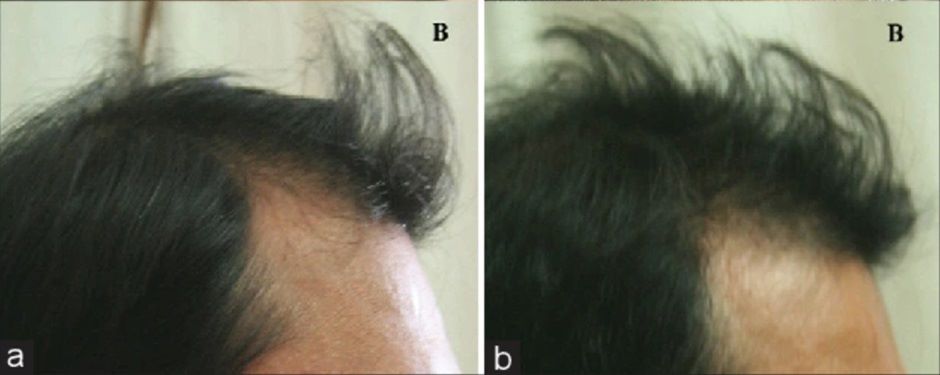
The image above [4] shows the effect of Minoxidil on a receding hairline, a typical symptom of male pattern baldness. After 4 months of daily application of topical Minoxidil 5%, the patient’s hairline is thicker, more even, and more youthful-looking.
Finasteride
Finasteride is another popular, research-backed medication for male pattern baldness. Finasteride tablets are the most commonly prescribed hair loss medication in the world; over 69% of surgeons say they always or often prescribe Finasteride for male pattern hair loss [2].
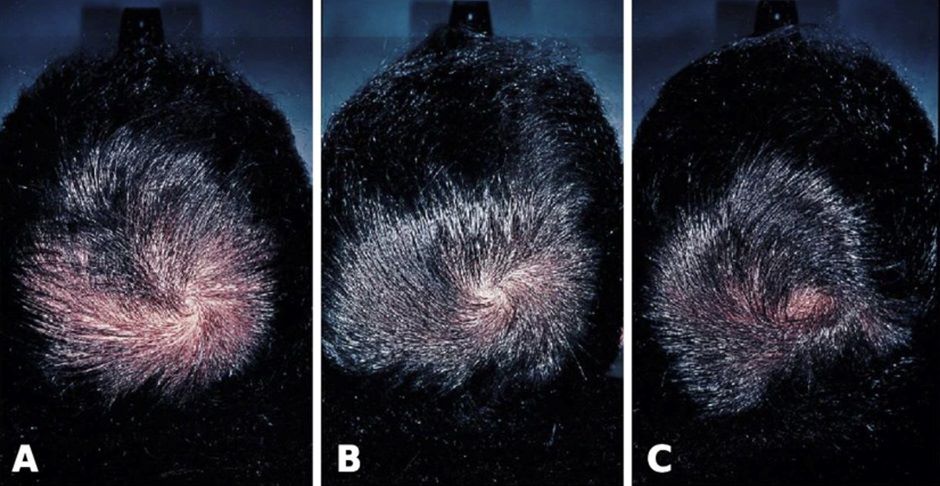
The image above shows Finasteride usage over two years [5]. This man took Finasteride for male pattern hair loss and within one year (B), he had increased hair growth around his bald spot on the crown. By two years, he had regrown most of his hair (C).
Hair growth supplements
Manual sells hair growth vitamins and power shampoo that aim to improve hair loss. The active ingredients in the hair vitamins are biotin, collagen, selenium, and zinc.
The link between vitamins, minerals, and healthy hair growth is understudied. This means there’s a lack of accurate guidance on the effects of hair growth supplements.
Here’s what research says about the ingredients used by Manual.
Biotin
A 2024 literature review suggests there are no high-quality studies supporting biotin’s use as a hair growth supplement [6]. However, there’s some research that suggests biotin supplementation may improve hair growth if you have a biotin deficiency and an underlying health condition [7].
Collagen
A small amount of in vitro research suggests marine collagen peptides may support hair growth in people with some types of alopecia [8]. In vivo clinical trials with humans are needed to answer the question of whether collagen helps hair growth.
Selenium
A selenium deficiency can sometimes lead to hair shedding, but too much selenium has been shown to cause hair loss [9]. One study suggests the inclusion of selenium in hair loss supplements is concerning because selenium toxicity from supplementation is well-documented [10].
This can cause hair loss, skin lesions, memory problems, and gastrointestinal symptoms. Dietary sources of selenium, such as fish, eggs, and dairy, are usually safer than supplementation.
Zinc
Research suggests low zinc levels are linked to male pattern baldness [11-12]. However, there are currently no studies on the effects of zinc in isolation for male pattern baldness. However, there is research into formulas for androgenetic alopecia that contain zinc for hair loss among other ingredients, and have had successful results [13].
Power shampoo
Manual offers a power shampoo containing ingredients that may improve hair growth. The active ingredients in their power shampoo are biotin, saw palmetto, and caffeine. There is currently no research on topical biotin for hair loss, so let’s look at saw palmetto and caffeine in more detail.
Saw palmetto
A systematic review indicates that topical or oral saw palmetto can improve hair quality, number, and density in people with androgenetic alopecia and telogen effluvium [14]. It has a smaller effect on male pattern baldness than Finasteride [15].
However, there is a lack of research on how saw palmetto in shampoo affects hair loss. Its effects are likely to be much smaller because it only has brief contact with the scalp, unlike topical formulations that have time to be absorbed.
Caffeine
Research suggests topical caffeine is as effective as Minoxidil when used for at least 6 months [16]. However, leave-in caffeine treatments often yield more impressive results than treatments which are washed out quickly, such as caffeine shampoo [17].